Showing posts with label Prayer. Show all posts
Wisdom Vindicated by Her Works
Posted by Andrew Haines in Biblical Commentary, Prayer, Theology on 12.11.2009
The Lord speaks clearly today in the Gospel for those who put an emphasis on learning and knowledge: if one is truly knowing and wise, then he will be vindicated by his works. (cf. Mt 11:19)
It's always a struggle to discern whether or not, as a teacher, I'm educating my students in the best way possible. I am continually forced to ask myself the question (and "forced" is no understatement): am I acting in the name of divine Wisdom, or in the name of selfish expectation?
This morning at Mass, I was comforted (and challenged) by the words of Scripture: "Wisdom is vindicated by her works." Of course, this leads me to think that the only reasonable alternative is that selfish expectation is condemned by its works.

Nonetheless, contrary to our own intuitive designs, the greater glorification of God often comes by insuring that those in our charge (as Christian teachers of the faith) will be made capable of glorifying God freely in their own lives.
As I reflect on Christ's words to his disciples--that "wisdom is vindicated by her works"--yesterday's Gospel passage comes to mind, in which Jesus speaks of John the Baptist as the greatest of all men born of women. (cf. Mt 11:11) It was John's entire kerygmatic leitmotif that he must decrease while the Messiah must increase. (cf. Jn 3:30)
And it is the same passion that must infect every Christian teacher: namely, that the glory of God must increase in the aggregate, while selfish expectation decreases in the individual. Moreover, we must believe that if we teach the Wisdom of God authentically, and with dedication to the intricacies and beauties of its form, God's glorification by the many will be the glorification of God by the teacher. After all, since Christ is the true teacher, what else can we do than make ourselves as small as possible, and know that God himself--in his Wisdom--will vindicate our works of humility and virtue?
This is a monumental charge for anyone, and particularly for me, still seeking the grace fully to allow the Lord to be glorified, instead of expecting to glorify him by my own merit.
Please pray for me, and for my students.
Duruflé's Messe "Cum jubilo"
One of the most interesting things I've been a part of in recent months (or really ever, for that matter) has finally come to fruition. No, not my M.A. But it's almost as good!
Altogether, the CD is an entire Mass (sung the way it ought to be!) comprised of both Gregorian chant (Introit, Alleluia, etc.) and Duruflé's compositions of the Kyrie, Gloria, Sanctus/Benedictus and Agnus Dei. It even includes all the prayers, propers and readings from the Mass of the Immaculate Conception—the College's patronal feast.
What's more, there's a great deal of organ improvisation as well, done by one of the most influential and noted organists in the world today: Stephen Tharp. From the bells on the first track to the organ sortie on the final, this recording is something worth checking out. Even the CD booklet has some cool pictures, and some interesting (and meditative) shots of the NAC that some might enjoy. (The cover photo, above, is the mosaic in the apse of the Immaculate Conception chapel at NAC.) Plus, you'll get to hear me sing—and you'll be supporting a good cause.
So visit JAV and pick up a copy. And play it for your kids. They will like it too! [And if they don't, you can teach them!]
ProLife|ProPatria
 Most of the time, this blog is pretty philosophical/theological. I try to keep away from political talk, etc.—there are enough other blogs out there with that kinda' stuff. But sometimes, something worthwhile comes to light, which I'm not opposed to sharing in this forum. This time, the thing that has come to light is something I'm pretty intimately involved with.
In the wake of our recent presidential election, and in the midst of the melancholy that plagues many Catholic communities nowadays, some friends of mine and I decided to initiate something productive. We started an organization (or 'movement,' if you like) that seeks to foster prudent and authentic Catholic involvement in the political life of the nation. We call it: ProLife|ProPatria. Our mission is simple: to encourage Catholics nationwide to work toward a better social and political situation by uniting in prayer and a single vision. To do this, we think the simplest steps will be the most productive, and so we've started with a very basic but powerful one: prayer cards. The card, about the size of a postcard, has a glossy image of the Trinity on the front [above], and a prayer for President Obama on the reverse side [right].
Contrary to most pro-life prayers, though, the one we've come up with is not just about the value of life. It is about the value of life specifically within the context of the Catholic tradition, and an understanding of Catholic theology and thought. Being a pro-lifer is about more than just saving lives—it is about fostering the fullness of life, which is the life of Christ that fills and sustains his Mystical Body.
The prayer we composed is this:
O Most Holy Trinity,
Ineffable Source and Author of our being, who enlightens the world and reveals to us the nature of personal love, the model upon which society is established,
Illuminate the mind and heart of our president, Barack Obama, that he might recognize the dignity inherent in each human life, from the point of conception to natural death.
Lead him, Almighty Father, to exercise his office according to the precepts of your justice, which delivers your children from wrongful exile.
Christ Jesus, Eternal Truth, allow him to know that the glory of God is man fully alive, and that the glory of man is the vision of God.
Holy Spirit, Spouse of the Immaculate, instill in our leader pure intentions, and inspire him to choose always the value of life.
Hear our prayer, O God of Mercy, defend our nation and its leaders and guide us always toward the vision of your eternal glory.
Amen
Anyone interested in purchasing prayer cards, or knowing of a group or organization that might be interested, is welcome to contact us at prolife.propatria@gmail.com for more information; or you can download and fill out an order form. Since we are all students (and finances are scarce) we cannot give the cards away at no cost, but we have come up with a price scheme that is near wholesale.
The total cost for the prayer cards is as follows (plus S&H):
500 cards — $99.99 ($.20 per card) + S&H = $121.49
1000 cards — $149.99 ($.15 per card) + S&H = $169.99
2000 cards — $225.00 ($.11 per card) + S&H = $255.99
5000 cards — $449.99 ($.09 per card) + S&H = $485.99
We are looking forward to distributing at many cards as possible. Ultimately, we want to be faithful to the teachings of the Church, and by being faithful to be successful, for the sake of our Church and our world. Your help is very appreciated!
Inclinations vs. Intentional Prayer
Posted by Andrew Haines in Philosophy, Prayer on 12.30.2008
Well, the holidays have taken a real toll on my blogging efforts. But I suppose that isn't such a bad thing. I've been escaping the books for a few weeks—and most intellectual-ish activities along with them!
But now I'm back. And after all this time away from thinking (at least thinking critically), I have a few thoughts that are probably long overdue.
First and foremost, I've been thinking quite a bit about prayer. My understanding of prayer is something that has, over the course of my life, taken drastic turns...for better and worse. 'Knowing' how to pray is just as hard as trying to figure out what it means to say, "I prayed." I'm sure that I won't get any solid 'answers' anytime soon—it's rather a mysterious thing—but there are some fundamental truths about prayer that are not dispensable, and these can guide us to seeing just how we can grow in a life of prayer, no matter our vocation in life.
In my mind, prayer seems to fluctuate between appreciating God's presence in a mystical, sacramental sort of way, and appreciating his presence in human interaction. On the one hand, there are times where the only place God seems present is in the tabernacle, in the Eucharist, and there is nothing I want more than to be alone with him, seemingly isolated from the outside world, and to pray. On the other hand, sometimes that is the last thing on my mind; sometimes I want nothing more than to be with other human beings, and to experience the affection and love their presence draws out from the depths of my personhood. Both inclinations are directed at some form of prayer, whether it be meditative or active. Neither inclination is, however, in itself a prayer.
What seems to be necessary for real 'prayer' to occur is that, recognizing these attractions of the heart, I actually do something about it. "To pray" is, most basically, a verb. It requires action.
Whether it be an affection for Christ in the Eucharist, or the indwelling Trinity in others (or even oneself), truly praying means that we are realizing that desire to be from God, and pursuing it as God would have us pursue it: by glorifying him, and seeking to give him our fullest and deepest attention. This sort of 'intentionality' that happens with prayer is the same sort of thing that happens when we see something new, or when we find something interesting that we want to know more about. The focus of our attention—the focus of our 'self'—becomes directed at another. We engage another being with our undivided intentionality. Whether that 'other being' is a book, a pencil, another human person, a divine person, or the Trinity united, the importance of our intentionality is unchanging. We examine it, inspect it, note the impressions it presents us with, take it in, process it, meditate upon its true meaning, and engage it for what it is. We bring to this encounter just as much as does the other. And we bring to prayer just as much as does God. Prayer is the unity of two autonomous persons in a conversation of the heart. If we are not fully present, how are we ever going to pray?
With all this in mind, we can see how prayer can occur either meditatively or actively. It becomes clearer that "to pray" does not simply mean to drown out distractions, but rather to intentionally move toward the object of our affection. It means to discover the revealed God by endeavoring to approach him genuinely, and out of the affection of our hearts. We do this at church, before the Eucharist; we do it in our lives, in being and living with others. The presence of God is everywhere, and our affection towards this presence can be prayerfully transformed anywhere and everywhere. How else could St. Paul have commanded Christians to "pray without ceasing?"
Of course, realizing this and actually doing it are two different things. Understanding the theory of prayer is just the same as understanding that "I am affectionate toward this or that thing, but refuse to do something about it." Reading (or writing) about prayer is not praying. At least not in itself. However, it can be prayerfully transformed if the focus of the understanding is actively directed at coming to know God more fully, and discovering his Truth more plainly. It's not always easy to tell the difference between 'knowing' something and 'doing' something. I suppose the tell-tale sign, though, is that action will always issue a change, while knowing is the foundation for that action. "Do I see myself changing because of my prayer life, or am I simply learning more about what praying might mean?" In more philosophical terms: "Am I simply inclined to goodness, or am I intentionally disposed to it, seeking it actively, and desiring it with my entire person?"
From the Mouths of Babes
I can't lie; usually when people are noisy at Mass it really annoys me. I guess it's just one of those things I expect shouldn't happen: people talking to one another, rustling around, reading something non-liturgical, etc. In short, it's distracting.
But, like any rule (even rules I make up myself for my own comfort), there's an exception, and yesterday that exception came in the form of a little boy who babbled and chattered from start to finish of the Eucharistic prayer. At first I was typically drawn into his noise—'I was just getting prayerfully focused! Now this kid is going to start talking behind me... geesh...' Naturally, I couldn't help but listen to him, since by this time I was clearly uninterested in my former meditative ideas. The funny thing is, the more I listened to his words, the more my affection was drawn prayerfully back to the altar.
The little boy said lots of things, but I remember two particularly:
First, his comment at the preparation of the chalice. The priest had already said the prayers of offering for the bread, and was preparing the chalice by mingling the water with the wine. Suddenly I heard: "Mommy! That's water like I can drink!"
And indeed it is. Somehow this little kid, who was clearly uninterested with the Mass up until then, became immediately fascinated with the Incarnate Word; he realized that something in the depths of his personhood was compatible with what was going on at the altar. 'Mommy! The priest isn't doing magic. He's using water, and I drink water!'
By the time I got finished dwelling on his beautiful and childlike insight, it seemed we had sped to the words of consecration. My heart was already more affectionate toward the sacrifice than it had been before. But again, I heard spiritual commentary usher forth from the pew behind me: "That's Jesus' body—the priest is holding Jesus' body," whispered the lady. "Where? Where!" shouted the boy. "I want to see it!" Indeed, his realization that something normal was becoming something super-natural baffled him. 'I just saw water, but now it's not water? Never mind! I want to see what happened to the water and the bread!'
I suppose we can meditate all we want on the sublime mysteries of the faith. They are certainly worthy of meditation. But what happened to that little boy was something much more pure than any meditation—it was an actual realization that what stood before him was something that should never be. He heard the testimony of a miracle, immediately believed, and sought to discover its root. Really, he exemplified the entire Christian life in about ten seconds. Is it any wonder that Christ extols the childlike?

Secondo l'Affetività del Cuore...
Posted by Andrew Haines in Biblical Commentary, Book Reviews, Prayer on 10.18.2008
Recently, I've been getting more involved in the Communione e Liberazione group on campus. Part of the regular routine of the 'School of Community' factor has been reading the works of Msgr. Luigi Giussani, the movement's founder and theologian. Without a doubt, Giussani's writings always leave you with a nugget of truth to consider throughout the next week, until you come back for a little more.

"You follow me because I satisfied your hunger with bread, freely, but I offer you something else to eat; I give you my flesh to eat and my blood as drink. And he who eats of this bread and drinks of this blood will live forever." (Si Può Vivere Così, 136) The response to this invitation, a resounding disapproval. A few remain. "To whom else can we go? You have the words of eternal life," asks Peter. This part is well known.
But what occurs in the hearts of those disciples? What caused Peter to utter his words? It is this that Giussani focuses upon. "I don't understand this," he supposes Peter was thinking, "but if I go away from him, no one else can speak to me according to the desires of my heart." (138)
This idea of 'speaking to the heart' is absolutely pertinent to a discussion of obedience in the Christian sense. As Catholics, especially, we are called to an obedience to the truth as it is understood and taught by the Magisterium of the Church. This obedience, however, does not arise from some efficient causation—we are not compelled to obedience, for that would not be obedience but slavery. Neither is obedience appealing because it enables us to avoid punishment, since that is equally as unfree. Rather, obedience is appealing to the Christian precisely because it is a language aimed at the desires of the heart; it is the fitting response to the Lord's call to us that we should follow him and find eternal life and happiness in communion with his Son.
This causes me to wonder a few things. Namely, since human beings are quite obviously wired for happiness and goodness, why is it that we are so quick to act contrary to the desires of our heart? After all, it wasn't the case with Peter that the Lord introduced new desires to his being, but rather that he tapped into those already present. Assumably, the same would have been true for the crowd that left. Didn't Christ tap into their deepest desires as well? After all, he is God—he can do that! But why, then, did they so quickly leave him? No doubt they were scandalized, but why?
The answer, I think, arises from the same innately human locale as the desires of the heart. As human persons, we so often desire to construct our own conceptions of reality that we fail to see the ones planted within our very being as having any value. Often, we are so quick to put forth our own ideas of how things should fit together that we fail to see the coherence of the picture before our eyes. Even more, we fail to see that not only does the picture cohere with itself, but that it actually corresponds to reality as well!
This is exactly what Christ offers those to whom he gives his Body and Blood for food and drink. He speaks to the heart, completes the picture, and bestows a knowledge of reality so deep that it seems utterly scandalous. But, as Giussani presents to us, it is precisely because it seems so scandalous in the beginning that it is so truly fitting and magnificent in the end.
"No Vacation From A Vocation"
Apologies again for the delay in posting. Like I mentioned last week, things are getting a little hectic here. Stay tuned for more, but expect infrequency for a bit.
In the meantime, something good to consider…
As the school year comes to an end for us students (sooner rather than later for those in the US—I’ve still got 2 months!), the prospect of summer looms ever closer. We can almost smell the upcoming bout of freedom. At first it smells sweet, like the springtime that ushers it in. But inevitably our freedom to be free will grow unbearable as the summer grows unbearably hot and—without a doubt—long. All that we had planned to do will go out the window in the end, and we’ll be back to school in the fall without much of a sense of achievement. Almost suddenly, it seems, our summer evaporates from us and all we are left with is a lessened vigor for studies and work come September. This might be a bit dramatic, I admit, but such sentiment is what usually defines my summers and I’m sure most can relate…
Two things become evident in such a reflection as this: first, the place of ‘freedom’ in our lives and its true and false implications; secondly, the import of the age-old maxim that “You can’t take a vacation from your vocation.”
Although one could talk about human freedom to no end, a critical point of what it means to be truly ‘free’ can be seen in the summer experience above. In the beginning, we equate freedom with being able to choose something (e.g. not studying, laying on the beach, drinking margaritas, etc.). Then, we suddenly find that through our free choices we have somehow become entangled in a web of laziness and inactivity which, although it was formerly serving the good of mental and physical refreshment for the coming year, is really keeping us from wanting to work at all. We go from being ‘free’ to being quite enslaved and somnolent. In the hope of attaining true freedom, we completely miss it.
The resolution to this simple mystery of summer-time planning—and surely life in general—comes when we consider the “no vacation from a vocation” idea. If our fundamental vocation in life is to holiness, which we recognize as the unchanging teaching of the Church and of its Head, Jesus Christ, then we can quickly affirm that anything making us fail in virtue or our acquisition thereof is not an appropriate means of relaxation and, therefore, will hinder us from being truly free. Certainly this means not doing things that are objectively evil just because we have the time. But it also means not doing things that are good and right in themselves to an excessive degree. This is all pretty commonsensical, I’m sure, but no matter how many times you hear it, how often do you just blow it off?
With a couple whole months of time to either grow or slacken in our primary vocation to holiness, it’s worth considering just how we will plan to avoid instances of laziness and to encounter opportunities for genuine Christian growth throughout the summer. Certainly, the Sacraments provide a sure foundation for any discipline; in them we encounter Christ himself, who is the divine Logos and Understanding of the Father. The summer is surely a time to deepen our appreciation of Christ’s role as the mediator of all truth and revelation, which will in turn deepen our resolve to learn and study well when school time does pick up again. If summer is meant to refresh our minds and bodies for the work of the Lord, then we ought not to forget the Lord in the midst of our relaxation.
Confession & the Ecclesial Body
The two bookends of the priesthood—for lack of a more theologically descriptive term—are the Sacraments of the Eucharist and Confession. Really, it is through offering the Holy Sacrifice of the Mass and hearing the confessions of the faithful that the priest does the greatest work in the salvation of souls and the sanctification of the world. Of these two Sacraments, the most written about is certainly that of the Eucharist, which comes as no real surprise given its primacy as the “source and summit” of the entire Catholic faith. In seeing the beauty of the Eucharist, though, we cannot be unconscious of that beauty which flows just as profoundly from the Sacrament of Confession.
In the ‘economy of salvation’ (or the manner by which God has deemed salvation to be achieved through Christ), one could say that the Eucharist presents to us the opportunity to share fully in Jesus’ Passion, death and Resurrection, while Confession affords us the necessary purification required to approach such an august mystery of redemption. The two function in complete harmony with one another and, although they are no more ‘Sacraments’ than are Baptism or Confirmation, they are certainly the most regularly encountered in the life of the ordinary Catholic. Thus, our understanding and appreciation of both the Eucharist and Confession need to be refined time and again, in order that we might most fully share in the Sacrifice of the Mass every Sunday. Here, we can say a few things about Confession in particular that may provide a little further insight into a Sacrament all too often overlooked.
I will assume that the basics of what Confession is don’t need to be explained—it is the normal means by which serious sin is absolved by the authority of the Church, through the priest acting in persona Christi capitis. Even in this small description, however, if we don’t read carefully, it may seem as though everything is overly-apparent; really, there is more than meets the eye, particularly with regard to the “authority of the Church.” While it is true that this authority subsists in the magisterial teaching of the Church that the remission of sins is in fact possible and real when exercised according to the norms of the Sacrament, what may not be so evident is that the Church—rightly speaking—is something bigger than just the Magisterium. Ultimately, if what the formula for absolution says is true—namely, that “through the ministry of the Church, I absolve you…”—there is something happening in every Confession that involves the participation of all the faithful throughout the world.
The “priesthood of the faithful,” which is a resulting character of Baptism for all Catholics, is certainly instrumental in bringing about the forgiveness of sins. What is important is that we all participate properly in the degree of priesthood which we have received—either in Baptism or Holy Orders. “Through the ministry of the Church,” sins can and will be forgiven. That is a magnificent charge, and one that we should not neglect or take for granted.
Posted by Andrew Haines in Prayer on 3.31.2008
There is nothing which strikes more to the very core of Catholicism than seeing someone's heart converted before your eyes. For all the suffering and struggle that being a Christian in the modern world brings about for those who love Christ truly, the glory he shows those same disciples is laden with an inexplicable splendor and purity. The outcome of the Christian life is seeing Christ, and seeing him work miracles and signs greater and more proximate than any one could imagine. We are called to the work of the Lord and to being his very instruments. I will write it here, though: the only reason we ever "succeed" in this is because we simply let the Lord do the work for himself.
Our "success" is born from our failure. Our strength, as Paul writes, is born from our weakness, in which the Lord's power is made manifest. In our pains, the pains of Christ on the Cross are shown forth; and in our inability to redeem ourselves, his gift of redemption is boldly announced. In all things, the power of the Paschal Mystery pervades our very existence as human beings. It provides unmistakable meaning in the face of the meaningless and unfulfilling promises offered by the world around us--offered by our own flesh and desire for independence from a superior and loving God.
"All men, by nature, desire to know," says Aristotle, but our desire for knowledge is not as we often imagine it. There is knowing that happens through empirical and scientific research. There is also knowing that occurs as a result of being burned. We can study the fire of our lives and our human existence, but we can also reach out and touch it. What we know from being burned is infinitely more 'real' than what we will ever know from observation. What we know from a searing encounter with the Lord Jesus, who burns away our fleshly narcissism, is ever more real than what we know from studying our own flesh and desires. Both are knowledge, but one is limited while the other is supernatural. Only by way of the latter do we touch the divine life we are called to share in, and only in being burned by its sweet Flame do we know its power and glory.
Christ is risen! The fire of the divine life in the Holy Trinity is ablaze! Let us approach it with great reverence and awe, and know quite certainly that there is power here to burn us. Christ will ignite our hearts, and we will show his Light to the ends of the earth.
Christus "Descendit ad Inferna..."
Posted by Andrew Haines in Church Doctrine, Prayer, Theology on 3.22.2008
The Second Reading from Matins for the Divine Office of Holy Saturday presents a glimpse of the mystery we celebrate today, which is unrivaled in eloquence and clarity. I was very struck when I heard this spoken in the chapel this morning; it sums up well, in beautiful detail, the whole mystery of our salvation.
__________
From an ancient homily for Holy Saturday
Something strange is happening – there is a great silence on earth today, a great silence and stillness. The whole earth keeps silence because the King is asleep. The earth trembled and is still because God has fallen asleep in the flesh and he has raised up all who have slept ever since the world began. God has died in the flesh and hell trembles with fear.
I am your God, who for your sake have become your son. Out of love for you and for your descendants I now by my own authority command all who are held in bondage to come forth, all who are in darkness to be enlightened, all who are sleeping to arise. I order you, O sleeper, to awake. I did not create you to be held a prisoner in hell. Rise from the dead, for I am the life of the dead. Rise up, work of my hands, you who were created in my image. Rise, let us leave this place, for you are in me and I am in you; together we form only one person and we cannot be separated. For your sake I, your God, became your son; I, the Lord, took the form of a slave; I, whose home is above the heavens, descended to the earth and beneath the earth. For your sake, for the sake of man, I became like a man without help, free among the dead. For the sake of you, who left a garden, I was betrayed to the Jews in a garden, and I was crucified in a garden.
See on my face the spittle I received in order to restore to you the life I once breathed into you. See there the marks of the blows I received in order to refashion your warped nature in my image. On my back see the marks of the scourging I endured to remove the burden of sin that weighs upon your back. See my hands, nailed firmly to a tree, for you who once wickedly stretched out your hand to a tree.
I slept on the cross and a sword pierced my side for you who slept in paradise and brought forth Eve from your side. My side has healed the pain in yours. My sleep will rouse you from your sleep in hell. The sword that pierced me has sheathed the sword that was turned against you.
Rise, let us leave this place. The enemy led you out of the earthly paradise. I will not restore you to that paradise, but I will enthrone you in heaven. I forbade you the tree that was only a symbol of life, but see, I who am life itself am now one with you. I appointed cherubim to guard you as slaves are guarded, but now I make them worship you as God. The throne formed by cherubim awaits you, its bearers swift and eager. The bridal chamber is adorned, the banquet is ready, the eternal dwelling places are prepared, the treasure houses of all good things lie open. The kingdom of heaven has been prepared for you from all eternity.
"Vexilla Regis Prodeunt..."

So begins the proper hymn for the Divine Office during Holy Week, and a fitting summary of the meaning behind it all. During this time, as I wrote last time, the Church celebrates not only the historical Passion of Jesus Christ, but also its enduring relevance and effective power in today's world and in the universe as a whole. The "mystery of the Cross" brings us to marvel at the greater mystery of God himself, who chose to reveal the summit of his saving love in no other way than a gruesome and excruciating death. Nevertheless, in this way we come to know him most perfectly, and to know the result of our sin and its gratuitous remission in a way that would be incomparable by any other means. "We proclaim Christ crucified," says St. Paul, "a stumbling block to Jews and foolishness to Gentiles, but to those who are called, Jews and Greeks alike, Christ the power of God and the wisdom of God." (1 Cor 1:23)
Today marks the beginning of the heart of Holy Week: the Easter Triduum. On Thursday evening, the Mass of the Lord's Supper begins the solemn period of prayer and meditation that surrounds Christ's Paschal Mystery; on this evening, we remember Jesus' Last Supper with his Apostles, his teaching of service, his prayer for unity among his followers, the institution of the Eucharist, the betrayal by Judas Iscariot and the subsequent imprisonment of the Son of God. Within a few short hours, the aim of Christ's life becomes directed at its final goal, the goal for which he was born in the first place and about which he had preached and prophesied up until this very moment: "The Son of Man must suffer greatly and be rejected by the elders, the chief priests, and the scribes, and be killed and on the third day be raised." (Lk 9:22) Suddenly, everything for the Apostles comes into horrific focus.
Perhaps one of the most insightful realities the Church gives us about this time of great trial, though, is that it should really come as no surprise; Jesus was constantly preaching self-denial, self-offering, suffering, patience, even death for the cause of salvation. Even before he was born of Mary's womb, Christ's mission was precisely to redeem mankind of its sins by any means necessary. His death on the Cross not only restores our fallen nature, but actually elevates it and glorifies it beyond what is naturally human. In essence, his goal of salvation is one of transformation in a very real and actual way, which renews and then exalts our human nature unto the supernatural realm. This is present all throughout Jesus' preaching in the Gospels, and is always coupled with the need for self-sacrifice and carrying the Cross; he never lets us lose sight of that.
Here, then, the Cross becomes the new Tree of Life, created by the Father to counter the sin that the first Tree of Good and Evil permitted in the Garden of Eden. Jesus Christ is manifested as the primordial Adam, generated by the Father to redeem the fall of the first Adam. The Blessed Virgin Mary, at the foot of the Cross, is the new Eve, perfectly submissive to the will of God and the will of her son, even though she did not fully understand all that was happening; she offered her heart to be pierced by a sword of sorrow beyond imagination, and allowed to be restored what was pridefully taken by her predecessor. The drama of the Cross is nothing less than the drama of Creation anew, this time a Creation into the glorified and exalted humanity that our Lord has desired for us since the beginning of time. The work taking place is truly divine, and ought to truly humble us and make us gasp in awe at the passionate love of our God. Indeed, as the Church sees, we are now bound to sing the anthem of this great feast of our redemption: Vexilla Regis prodeunt, fulget Crucis mysterium.
Thus begins the Paschal Triduum, and the celebration of our salvation.
The "Great Week" of the Faith
Posted by Andrew Haines in Church Doctrine, Liturgy, Prayer on 3.16.2008
Before the liturgical reforms of Vatican II, Holy Week was known as the "Great Week": Maior Hebdomada. This is a fitting title, seeing how the fullness of Christ's Paschal Mystery is actualized and consummated within the span of its days. In Holy Week, Catholics celebrate the triumphal entrance of Jesus into Jerusalem (Palm Sunday), his Last Supper and first Eucharist with the Apostles (Holy Thursday), his Passion and death (Good Friday) and finally his Resurrection from the dead (Easter Sunday). Certainly, these events--especially when seen together--are worthy of the title, "great."
I could write a book on Holy Week; there's just so much to say. The opportunities to reflect on the suffering, death and Resurrection of the Son of God are too much to describe in words. In fact, they transcend words, yet we only know them because of words: we know them through the Gospels and Tradition of the Church, and we live them in the Eucharist. Indeed the greatest thing about this "Great Week," then, is that we realize it's effects and mysteries perdure even until today. We are drawn into an experience of Christ's saving mission that demands our physical and mental attention; we are able to reflect on the mysteries as we participate bodily in the liturgies the Church has celebrated for 2,000 years. Here is a chance to experience completely the beauty of the Catholic faith--the same faith preached and defended by the first Apostles with blood and martyrdom--which subsists in the one, true Church, washed in the Blood of the Lamb of sacrifice, offered on the altar of the Cross. Holy Week demands more of us than just our participation in the liturgies of Palm Sunday, Good Friday and Easter Sunday, however. If we truly wish to delve into the mysteries that we are faced with in such a proximate and real way, we are called to offer our very selves, if only for this week, to the God who offered his only Son for our sake. It is safe to say that if we fail to join Christ in his sacrifice upon the Cross, we will certainly fail to experience his true glory in the Resurrection.
To modern ears, this seems like an extreme claim. The fact is that for ancient ears the claim was no less severe. Sacrifice demands suffering, and suffering demands pain. Our lot as Christians is nothing less than the lot of Christ, who told his Apostles just before his trial and suffering that "no slave is greater than his master. If they persecuted me, they will also persecute you." (Jn 15:20) As our Master tells us this on Holy Thursday, we ought to consider the rest of the Easter Triduum (the three days from Thursday to the Easter Vigil on Saturday night) as our chance to share in the persecutions of Christ. These three days, in particular, provide a time to share in the trials and tribulations of the early Apostles: with Peter, who denied the Lord; with Judas, who betrayed him for worldly gain; with John, who stood by him as he suffered; with Mary his mother, who pondered and suffered the fullness of the Passion in her heart, and whose faithful witness can be seen as the first faith of the Church during Christ's bloody Mass of the Cross. All of these mysteries become accessible to us, and all in profound depth during this Holy and Great Week before Easter.
Conscience Forming (Part II): Charity
Posted by Andrew Haines in Prayer on 3.09.2008
On the heels of last day's post about the proper formation of one's conscience, I thought a brief look at examining growth in that area would be appropriate. All of us, if we hope to truly grow closer to the Lord, need to be able to recognize some guideposts in order to tell which direction we are moving, or if we are even moving at all. If we are fortunate enough to have access to the last item I recommended, i.e. a holy and wise priest as a spiritual father for our journey, these signs will be easier to recognize and grow from. The reality is, however, that most Catholics either don't have immediate access to a priest for the amount of time it requires for spiritual direction, or just simply don't feel comfortable in approaching one for such a thing. In either case, if someone really feels prompted to follow the Lord's call more closely in his or her own life, I would urge them to fully trust the Church's wisdom in this matter and seek out a solid spiritual father. We can only do so much on our own, and the counsel and prayer of a holy director does inestimable good in augmenting our own spiritual awareness. Thus, I do not intend to substitute for such a relationship in these posts, but simply to address some fundamental points that should help any of us see the Lord's face more clearly.
One indispensable and very noticeable aspect of being formed in conscience is the degree of charity we have for our friends and neighbors. Quite obviously, charity is the groundwork of the whole Christian life, as well as its ultimate goal; after all, Deus caritas est: "God is love." If we want to gauge our progress in our own personal formation, we need look no further than our consciousness and exercise of charity. When we are being formed in conscience, we are being formed in a disposition of love, since all decisions we make in conscience should ultimately call us to self-giving and Christ-like love. Formation in conscience is not formation in virtue though, and so we cannot simply equate the two; someone who is genuinely charitable may be terribly misinformed about what is right and wrong in a certain situation. Forming one's conscience allows for a formation in virtue. When we are properly formed, and thereby disposed to better decisions in our moral life, an increase in charity naturally follows.
Oftentimes, this distinction is misunderstood in a manner that leads some to great confusion. We must not simply think that all charity is good enough; there are some ways of loving that are higher and more perfect than others. For example, if someone believes they love another person and decides to express that love in sexual activity outside the bond of marriage, there is a level of love being expressed, but certainly not the highest degree of love possible; here, the love is more self-centered than self-donating, and this selfish form of affection ultimately leads to a grave sin (wherein we love ourselves above God). Thus, love does not equal a well-formed conscience. Rather, if a Catholic is properly formed in conscience, they realize that such behavior is not intended by God and that the same sexual activity should be reserved to marriage: a formed decision resulting in a greater and more perfect exchange of love. Although this example is a rather clear one, the same principle applies in all situations. We cannot ever presume that our love is pure unless we have based that expression of love on an understanding of the situation that is formed according to the truths of the faith.
In the end, love is the true test of our lives as Christians. If our understanding of reality lessens our ability to love authentically, then we haven't understood the truth of reality authentically. All formation of conscience, all learning about our faith and the world we live in is designed to free us to love God with our whole heart, mind and soul, and to love our neighbor as ourself. If we keep this objective in mind, becoming formed in conscience will be much easier and more realistic.
The Importance of a Formed Conscience
Posted by Andrew Haines in Church Doctrine, Prayer on 3.05.2008

To begin, forming one's conscience is a necessary starting point; there isn't much we can do if we haven't first formed our conscience. This isn't a one-time event either, but rather a life-long process of formation and re-formation, just as we are re-converted to the Lord each day in our knowledge of his love for us. Ultimately, being formed in conscience is both an active and passive reality, wherein we must both actively seek out the truth (which the Church preserves and teaches) as well as become open and receptive to the truth, which God presents in the world and in human interaction. There is no simple way to sum this up, it seems, since it really is a huge and all-encompassing endeavor. Being formed in conscience is being formed as a person and nothing less.

In addition to the liturgy and Catechism, another great help in forming one's conscience can come from talking with a good and holy priest, either casually or in the context of spiritual direction. Priests are education in theology and spirituality specifically for the purpose of helping people come to see the fullness of truth in Jesus Christ. Likewise, they make promises to live celibately and simply so that their entire life might be at the disposal of those same people. The Church desires that all priests grow in wisdom and holiness specifically for this purpose of becoming good shepherds in the image of Christ, the true Good Shepherd. My recommendation to any Catholic experiencing this desire to become well-formed in conscience would be to actively seek out such an edifying spiritual relationship with a spiritual father, one known for his holiness, understanding of the faith and adherance to the Church's teachings.
Hopefully this more pragmatic view of virtue (or at least the beginnings of it) has helped to show just how we can go about becoming truly holy as Catholics. Being formed in conscience requires much work and perseverance, and is never an easy task. However, Our Lord so eagerly desires our growth in faith and charity, as well as our virtuous interaction with our neighbors, that there is no reason why we shouldn't start in that life-long process of formation and conversion right now.
Soft Hearts are Sacred Hearts
As I was considering today the many woes of life (i.e. complaining to myself about how much I had to do and was pushing off till later), something kind of great struck me. In the midst of all the hectic schedules and pending assignments, I suddenly had the realization that God is more powerful than all of it, and that he ultimately has the ability to make our hearts so set on him that the turmoils of the world are powerless in distracting us. Really, it was a brief actualization of God's efficacious ability to truly and positively do things in our lives, something we often don't give him the credit for.
This meditation can take place right in our own lives. There seems to be a tremendous correlation between the openness of our heart to the needs of others and our own openness to being hurt; when we expose ourselves to others' torments in the hope of helping them, we also leave ourselves vulnerable to attack in that unguarded moment of self-gift. Our desire for charity becomes the instance of our deepest agony. This is true in any human situation, but particularly those where the charity offered and the intensity of human suffering are deepest. Often, if we reach out to another and find ourselves deeply pained by their lack of response or reciprocal self-gift, it can be a good sign that the Lord's grace in our actions was quite profound.
The example par excellence of this painful self-offering is Jesus Christ; it was only out of love for us that Christ came to earth, and his openness to teaching us the Truth of God was pierced through it's soft core with nails, against a Cross. The tender love of God was awarded the response of cold and brutal death. But, the same heart that was pierced by the lance of the centurion immediately issued forth both blood and water, and all attempts to subdue divine charity were covered by the outpouring of divine grace. In short, love conquers agony, and grace washes away even the hardness of human cruelty.
This is so true in our lives, if we live by the statutes the same Lord teaches us through the gift of his Church. In the end, our hearts, open to the tumult of daily life and the ills of worldly disdain and struggle, will triumph in confluence with the Sacred Heart of our Lord on Good Friday. This is precisely the role of the sacraments: to provide the font of divine grace in our lives by which we are filled up, so that when our lives are demanded of us (in physical or spiritual ways) we might provide the world a glimpse of that same life-giving agony that redeemed us all in Christ.
Rejoicing in Suffering
Now that I've finished my exams (and all in one week, at that), I'll have a little more time to devote to writing and keeping this thing up-to-date. It seems like I've had a lot of great ideas floating through my head lately, but most of them seem to have been subsumed into the amalgamated blob of studies, which has ruled me for the past 7 days. Thus, something I can write about without much research (and no doubt should, seeing how this is a Catholic blog after all) is Lent; it seems like Christmas just happened! Alas, our great rejoicing has quickly turned into mourning and penance...or has it?
If the goal of Lent is to see the Lord more and more clearly in our daily lives, then this seems to be precisely the way to start. After all, as St. John writes (and Pope Benedict XVI cites), "Deus caritas est ('God is love'), and he who abides in love abides in God, and God abides in him." (1 Jn 4:16) What better way to God than love? And what better model of love than the Son, who is the visible image of the Father and who 'abides' perfectly within his heart? Moreover, the same Son even gives us the exact formula for his own great love: "To lay down one's life for one's friends." (Jn 15:13) Indeed, if all this is true, "the burden of sin is most easily aleviated by charity."
This all comes as no affront to the significance of penance. Instead, it augments the importance of penitential sacrifice, giving it a telos ('end') that is otherwise unrecognizable; the goal of penance is charity, nothing less. No matter what penance we choose to offer during this season of Lent (even the classics of 'no sweets' and 'no TV'), we ought never to forget that the ultimate goal is Christ himself, and bringing about the kingdom that he so passionately desires for us. It's also worth mentioning that if this goal to bring about the removal of sin in our lives and the world is sincere, we should really consider a Lenten penance that will cause us some notable level of sacrifice. We hear from the prophet Joel an admonition to "rend your hearts, not your garments." (2:13) Heart-rending is not pain-free and neither can our penances be; how can something be 'penitential' if there is no sacrifice? Even more, the degree to which we empty ourselves in sacrifice is directly translatable to the level of space we have for God in our freshly rent hearts. The love he pours out to ease the pain diffuses into all our actions, thereby making them acts of charity; the telos is recognized and the burden of sin is most easily aleviated. All of this, though, requires dedicated prayer, for without some significant time in quiet prayer to the Father our penitential hearts become callused, and the sin we hoped to aleviate returns in even greater measure.
"The burden of sin is most easily aleviated by charity," and all things in prayer and Christ-like humility before the Father. Lenten penance entails mourning, but to an infinitely greater degree it requires rejoicing in the fact that, when united to the sufferings of Christ on the Cross, our small efforts really can make a huge difference.
Spe Salvi: The Substance of Life
Posted by Anonymous in Prayer on 1.13.2008

I would like to highlight one theme that is particularly timely for us to meditate upon, especially with the season of Lent at hand: "What does the hope or substance of our life consist in?"
In the tenth chapter to the Hebrews, St. Paul writes to the early Christian community saying: "You had compassion on the prisoners, and you joyfully accepted the plundering of your property, since you knew that you yourselves had a better possession and an abiding one." Although the earthly substance (property and material possessions) had been taken from them, they stood firm and even joyfully accepted this plundering because they had a substance (faith in Jesus Christ) that was not only a better basis and foundation for their life, but one that could never be taken away. It is this basis of faith in Christ that relativizes and puts into perspective the material substance of our lives. It is only in this faith - God first - that we can be truly free.
It is very easy in our culture to mix up the order of material substance and our heavenly substance (faith in Christ). Our society tells us that the "good life" consists in a well paying job and comfortable lifestyle, while our faith tells us that we must live simple lives, take up our cross, and follow Jesus all the way up to Calvary. We know that trusting in the comforts of this life will never satisfy our longings and that although faith is not easy, it ends at the empty tomb of Easter glory; heaven itself and true fulfillment and peace.
Most of us struggle to keep the eyes of our heart on God. Let's face it, to trust in God with all our heart and all our mind and all our strength is difficult. But with God's grace we understand Jesus' words: "My yoke is easy and my burden is light." This Lent is a perfect time to kneel at the throne of grace and beg the good God for the strength to love Him and make Him first in our lives. Then, Easter will bring us the glorious freedom of the children of God.
"You have made us for yourselves O Lord and our hearts are restless until they rest in You." St. Augustine, Pray for us.
Catholic Universities and Catholic Identity
Posted by Andrew Haines in Church Doctrine, Prayer on 1.10.2008

Irony of ironies, I’m currently studying once again under the Jesuits (for the next 4 years!), but this time with a bit more focus and a better idea of what to expect. The poorly formed approach to Catholic education that I encountered during my undergraduate studies does not persist here to such a degree, thankfully. A few years ago, I was convinced that it was simply the Society of Jesus that was the problem, but now—through both my newfound appreciation for the Jesuits here in Rome and my experience of similar problems in other religious orders—I’ve come to realize that there is a bigger problem at hand: namely, a blatant lack of Catholic identity in supposedly Catholic institutions.
Suffice it to say that an institution’s own perception of its Catholic identity can lead it into either prosperity or ruin, depending on the position. To be quite pointed, I think that this very reality is quite underplayed and often overlooked completely. Think of it: how many institutions/groups/etc. that are nominally Catholic are so caught up in meeting secular standards that they all but abandon what they set out to do in the first place? Anything from the theology department of a major university to the Altar Rosary Society at the local parish can fall prey to such a collapse. If we begin thinking that we can function properly without adhering noticeably and explicitly to our Catholic foundation, the next and most certain step will be the absolute loss of all semblance of Catholicism; these institutions will (and do) ultimately sever their relationships with the Tradition of the Church and, in the end, become wholly non-Catholic.
In contrast to this negative tone—which unfortunately reflects the reality of the situation—perhaps the best question is, “What can we do to change this?” The simple answer is, “Never be afraid to be outspoken, even in the face of great opposition.” One particular recommendation that I would put forward is this: Catholic educational institutions are very responsive when it comes to their alumni, particularly in financial scenarios. If you know someone who contributes to an institution with a poor vision, talk to them about it. Most likely they are not giving money out of spite for the Church, but out of ignorance. I’ve seen firsthand what such simple conversations can do, and the results are usually very positive. The true ‘answer’ to all this lies, ultimately, in the mission of the organization. In some cases, it will take years of prayer and candid demonstration until we see much of a change in Catholic identity. Nevertheless, this is precisely what we are called to pursue as faithful Catholics in the modern world.
Some Thoughts on 'Belief'
Sometimes it can be very easy to ask the question, “Why do I believe in God?” Usually, the query is much more subtle, and most often we simply reaffirm our belief that there must be a God, since otherwise things would not make sense. Then we go on with life.
However sometimes—in the life of any Christian who is seriously trying to follow the Lord in his or her life—we face more serious, potentially grave doubts about our belief in God. Especially in light of our cultural and societal influences, it is becoming easier and easier to ask, “Isn’t it just silly to believe in God? I can’t ‘prove’ him…it doesn’t really make any sense.” While this doubt is certainly much greater than the first, I think that it also provides a much more profound chance to reaffirm our true belief in the God who really does exists, even if sometimes unclearly.
It can be tempting to think of ‘belief’ as something abstract: “I believe in God because I am able to rationalize his existence in my mind, and that makes sense. Therefore, he must exist, and I must believe in him.” In reality, nothing could be further from the truth! ‘Belief,’ by its very nature, implies that the thing being believed in is not ‘known’ in our strict, scientific sense. On the contrary, it cannot be know if we are to believe in it. This is especially true for God, who we will never fully understand because of his infinite mystery; our knowledge of him will always be one based on belief, never empirical science.
With that in mind, can we really consider ‘belief’ as something we do at one time and don’t do a few minutes later? Rather, shouldn’t our definition be based more on our habitual practice of acting in accord with the will of God that we know through our faith? In fact, even if we can’t convince ourselves intellectually that God exists, or that there is any good reason to believe in him, if we are still following his laws and loving him with our daily works, then have we really stopped believing? This is not to say that we shouldn’t seek to understand the Lord in the teachings that his Church hands on to us, or in the ways he reveals himself in very human, rational terms (e.g. through philosophy, theology, the beauty of nature, etc.). However, in the end, we should not be discouraged by our whimsical feelings of doubt, which are very human and—in the end—very finite.
Really, seeing belief as a more integrated, habitual reality allows us to understand it in a much more realistic sense. God does not demand that we dissect and parse him out, like a math problem. Instead, he desires that we come to know him in a similar manner as our mother, father, husband, wife, etc. We don’t believe in their love because we can scrutinize it or even feel it at times; we believe they love us because we come to know them and truly know their love for us. Why? Because we love them back. Precisely the same is true with the Almighty God of the universe; if we hope to believe in him—to know him—we must simply and consistently love him above all things.
An Unblemished Sacrifice
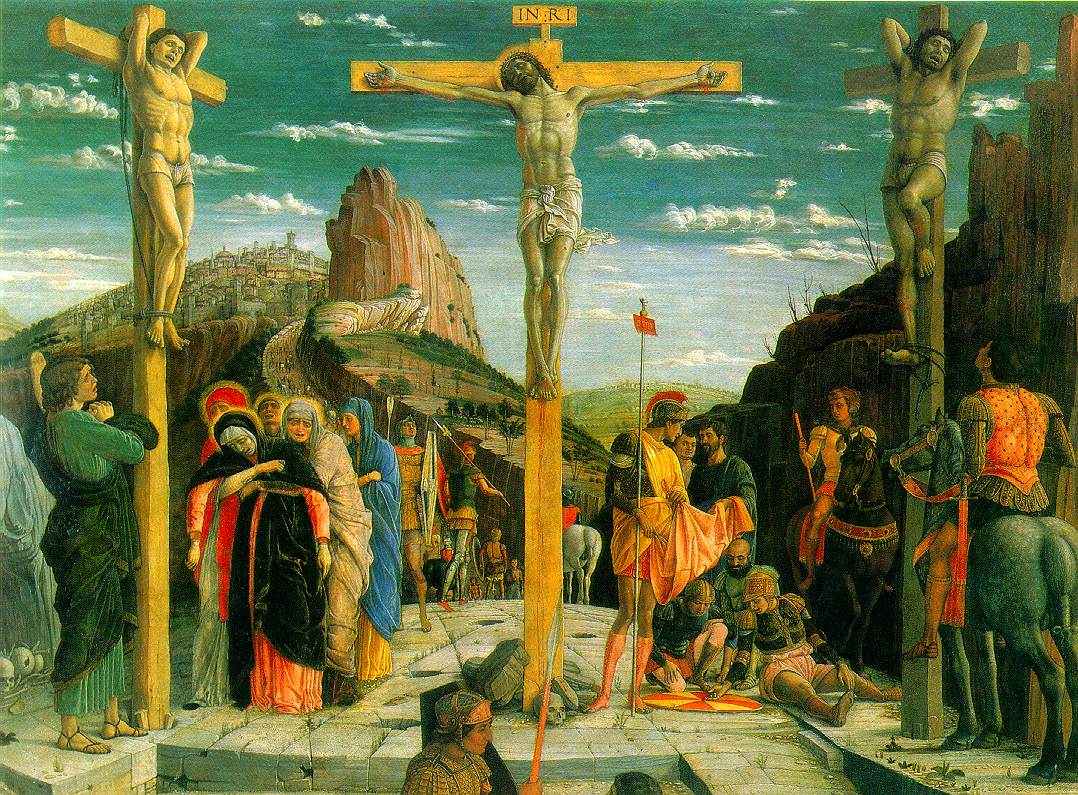
The vague (and quite frankly ‘flowery’) answer would be to take our daily hardships and offer them up to the Lord. But what does that mean? We hear it all the time, but after a while, at least for me, a statement like that loses its flavor. Although it is very general and non-aggressive—and thereby very ‘politically correct’ and culturally acceptable—it doesn’t offer us much substance for prayer or thought either. In its place, I would suggest this reaction to the question of personal suffering and what we ought to do to offer our own lives more perfectly: we must die. And not only must we die, but we must die courageously and be willing to spill out our life for the greater glory of God. That, I think, is what it means to offer an acceptable sacrifice to the Father.
In the face of a society that despises sacrifice, though, how can we justify such ‘gutsy love’ for our God? We are trained to think that sacrifices requiring total self-offerings are worthless, since the human person is the climax of reality and we ought to live life savoring that truth, not surrendering it for the worship of a ‘higher being.’ In our culture’s view, sacrifice is only beneficial if the ultimate individual outcome is a lesser suffering for the one sacrificing. In other words, only if we are going to ‘come out better’ for ourselves on the other side is our sacrifice worth making.
Christian sacrifice is quite the opposite though. The fact is that we know through faith that God will reward us for an unblemished sacrifice with eternal life in heaven. However, the object of our sacrificing must never be to better our own position (i.e. to ‘feel good’ with God in heaven); instead, we must always offer sacrifice to the Lord with the sole intention of loving him more fully and participating in the sacrifice of Christ on the Cross, which was the cause of our salvation. Although the outcome of a pure sacrifice to the Father will ultimately result in our being rewarded, as he tells us in the scriptures, he nevertheless desires us to offer ourselves not because of that, but simply because we love him and desire to thank him for saving us from the depravity of our sins. After all, the joy of heaven will not be one of disconnected, self-centered ecstasy (like the pay-off of the worldly sacrifice, which by its definition is devoid of God-centeredness), but instead heaven’s joy is one of intimate communion between lover and beloved—between God and his children. We must not aim to use God for our own gratification, but rather must realize that the fulfillment of our humanity will only come as a result of his intense love for us, and the self-giving and eternal communion he desires so much to share with us.
We can offer up our daily hardships to the Lord. We can also die for him. Both speak of the same reality, but I personally find much greater meaning in the latter; only if we die with Christ may we also live and reign with him in Paradise.


