Showing posts with label Church Doctrine. Show all posts
Ideological Catholicism and the Great Commandment
Posted by Anonymous in Church Doctrine, Theology on 1.26.2010

The contemporary scandal of "Liberal" and "Conservative" Catholicism is nothing other than Satan's victory over our strengths, that is right, our strengths. The Evil One likes nothing more than to turn a great good into a vice, through the exploitation of good intentions. The situation is actually a distortion of the great two tiered commandment which the Lord Himself taught us.
On the so called "Liberal" or "Progressive" side of the "Catholic spectrum," everything tends to implode into the second part of the great commandment so that social justice, soup kitchens and committees which "build community" become the center of our Christian experience. The faith thus becomes flattened and the vertical dimension vanishes, only to be replaced by an all inclusive "faith based" social network to promote human flourishing which in turn becomes a substitute for faith in the God Who reveals Himself in Jesus Christ. People forget that philanthropy and human compassion do not equal Christian charity. Many people who are pro-abortion and pro "gay marriage" are very generous in their donations to humanitarian programs. One need look only to Hollywood and even in our own cities. Giving money to poor people and working in a soup kitchen, as noble as these actions are, do not equal a morally virtuous life or a right relationship with God.

The Evil One's trick is to make people focus on one part of the great commandment to such an extent that they neglect the other. This twisting of goods imperils one's soul precisely because one cannot love God, whom they have not seen, if they do not love their neighbor who they can see. They, however, cannot love their neighbor well who do not love God through right faith, conversion and prayer. The awful condemnation that God utters towards those to be cast into "eternal fire" is because of neglect toward their neighbor in charity.
In the Office of Readings for the second Sunday after Christmas, Saint Augustine writes the following:
Let us beg the Lord to avoid the traps of ideological Catholicism and pray that we become faithful, loving Christians in a world where the light of faith risks being extinguished.
Benedict, Marini & the Importance of the 'Reform of the Reform'
Posted by Andrew Haines in Church Doctrine, Liturgy, News, The Holy Father on 1.11.2010
There's been a lot of buzz lately in the Catholic news outlets about one of my favorite topics: liturgy. And I'm eager to share a few thoughts of my own on the matter...
There was a time in my life (not all that long ago) when "liturgy," for me, was not much more than a physical expression of some poorly-formed and weakly grasped ideology--one that took issue with Reformation-esque practices as (in the words of Hilaire Belloc) a "profound cleavage" from the traditions of Roman Catholicism. But, at the heart of my rash reactionism was a poor understanding of just what that Roman Catholic tradition meant for the history of Western civilization as a whole; and, accordingly, a grasp of what the Protestant influence meant for its future.
I've come to the (slightly) more informed realization, recently, that the Church's influence on culture and tradition has not merely offered a sense of universal significance to something that was otherwise without, but rather that its very importance is entirely and inextricably united with the basic, cosmological significance of history and tradition as it has always unfolded and developed. And nowhere is this more clear than in the Catholic liturgy.
 Thankfully, this opinion is more than simply personal. And, in the last few days, it has been echoed strongly by papal emcee and liturgist, Msgr Guido Marini, in his comments regarding the "reform of the reform" of Catholic liturgy. In short, Marini asserts that the liturgy celebrated by the Catholic Church should have a character of historical continuity. "I purposely use the word continuity," says Marini, "a word very dear to our present Holy Father. [...] He has made it the only authoritative criterion whereby one can correctly interpret the life of the Church." (CNS)
What is more "Catholic" than "catholicism": that is, universality, interwovenness, and the highest sense of "continuity"? And, conversely, what is more "Protestant" than an affront to such continuity (often expressed even overtly in terms of "non-denominationalism" or post-enlightened "egalitarianism")? If there is no clear series of precedence, then there is no possibility for continuity.
What I saw initially as a "profound cleavage" from Roman tradition--the Reformed infiltration of the Catholic liturgy--was a valid perception. But without attempting to comprehend the absolute depth of such cleavage, my mindset was one aimed merely at fixing the problem at hand, and not at seeking to repair the damaged roots of a thorough and complete break with the sensus fidei. "The liturgy cannot and must not be an opportunity for conflict," says Marini; yet the reformist mentality of the late 20th century amounted almost entirely to nothing but a conflict with the stated and perennial traditions of the Church for centuries before.
As Marini is keen to point out, the real work of faithful Catholics in the 21st century--for those who wish not simply to profess the faith, but to live, preserve and pray it by their deeds and practices--lies in promoting an understanding of the liturgy that is, above all, wholly Christian, and wholly undivided and non-partisan. "Fixing the glitch" is not a sufficient response to the deep wounds inflicted by the Protestant mentality of spiritual individualism (or what Belloc calls the "alienation of the soul"). Instead, Catholics must follow the example of the Holy Father, Pope Benedict XVI, by further grasping the true meaning of liturgy (theologically) and by evangelizing their fellow Christians on its deep importance in the life of faith.
"I have learned to deepen my knowledge these past two years in service to our Holy Father," admits Marini. "He is an authentic master of the spirit of the liturgy, whether by his teaching or by the example he gives in the celebration of the sacred rites."
Indeed, Pope Benedict has never modeled an attitude of reactionism; but instead always an attitude of genuine appreciation and profound love for the beauty of the liturgy that is possessed simply by virtue of its supernatural character. Benedict and Marini speak of the "reform of the reform" not because they are Reformers, but instead because they realize the importance of eradicating the very mentality of the Reformation by way of a thoroughly Catholic "hermeneutic of continuity."
'Respectful' Research: A Gross Misrepresentation
Posted by Andrew Haines in Church Doctrine, News, Philosophy on 11.05.2009
Well, I suppose I should have seen this one coming.
Recently, the pharmaceutical group, Neocutis--which specializes in the production of burn treatments and skin creams--cited a 2005 Vatican document from the Pontifical Academy for Life in defense of its implementation of aborted fetal tissue research in the manufacturing of biomedical products.
'Faithful' Dissent: Where's the Line?
Posted by Andrew Haines in Church Doctrine, Liturgy on 10.26.2009
During my days as an undergraduate student at a (Jesuit) Catholic university, one could pretty well count on the fact that most campus ministers would define themselves, proudly and primarily, as 'faithful dissenters.' "I am Catholic," they would invariably admit, "but the Church is really behind the times on [insert dogmatically defined issue here]." From small-group leaders to musicians to sacristans, almost anyone involved in serving the Catholic community at my college was somehow at odds with some aspect of Church teaching.
And in all cases--on the heels of such discordant convictions--their 'ministry' to the community suffered. Instead of attesting to the truth of the Church's magisterial authority with their very lives, they spent most of the time discussing why such-and-such was holding them back from really living out an authentic Christian vocation.
Five years after those tumultuous (and tiring) days as an undergrad, I still can't seem to escape the phenomenon of 'faithful dissent.' And, what's more, of 'faithful dissent' coupled closely with a desire to minister to the people of God. In particular, an encounter I had just last month reawakened many questions that had, for a while, lain dormant in the back of my mind. Now, again, they persist.
For the last few months, I've been heading up the Gregorian chant schola at my local parish. After singing at a Mass the other weekend, the parish organist/music director approached me to discuss how Mass had gone. "You sounded good," she said, and proceeded to mention her thoughts on chant, music and our schola as a whole. "Gregorian chant is nice," she finally said, with a bit of a chagrinned look on her face, "but I don't want to go back."
"Go back to what?" I asked.
"Back! This diocese has a tendency to go back, not forward," she suddenly retorted. "And I don't know why! It's not doing what all the other dioceses are doing; and I think our diocese needs to realize that the past is not the answer. The Church needs to realize that it won't go anywhere until it reconsiders how it does things--and starts to let women up there!" She pointed toward the sanctuary.
In less than a minute, our friendly discussion of liturgy and music degraded into a diatribe against the male, celibate priesthood, and the very foundations of the Church's teaching authority. Without so much as hinting at a reason, our music director had bypassed all logical segues and proceeded directly into a rant about 'antiquated' rituals and mediaeval hierarchical nonsenses. However, I have to admit that (sadly) I was not all that surprised. And I immediately thought back to those folks at college--those 'ministers'--whose energy was spent more on rationalizing and justifying than on serving and teaching.
In light of this most recent run-in, I'm left with the same perennial questions: namely, is it really possible for someone who dissents from a dogmatic teaching of the Church--and who dissents so vehemently--to be an authentic minister of that Church? Or, to put it a different way, what's the line beyond which one's actions in the name of the Catholic Church cease to be effectively Catholic, and start to be effectively something-else?
For my old college campus ministers, being a 'faithful dissenter' was a badge of pride; and they wore is courageously on their breasts (probably alongside a rainbow ribbon and a "Catholics for Choice" button). For my present colleague, 'faithful dissent' seems rather to arise from some long-held resentment, which betrays a deep and fundamental divergence from the faith of the Catholic Church. In both cases, Christians feel a desire to serve others; but it is a desire weighted down heavily by the burdens of constant complaint, disagreement and capriciousness. In either case, the very bedrock of ministering to others "in the Catholic tradition" (as some are wont to phrase it) is utterly compromised by the desire to hold in tension two conflicting and diametrically opposed viewpoints--i.e. that of the Church, and that of unwavering personal opinion.
Certainly, there is no easy answer to this dilemma. It is an ubiquitous one both in America and throughout the entire world. But it raises deep questions that ought to be dealt with, lest we lose sight of the responsibility of Christian ministers--in whatever capacity--to serve with honesty and integrity. If one can only give to others so much as he or she has received from the first Giver, then how much of a unified, true message can one convey who himself sees truth as negotiable and unity as simply an option?
To minister to others requires that we first be ministered to by the Church herself. If our understanding of that Church promotes any sort of disunity among its members, then we are not aspiring to the true Christian Church. And if we are not ministers of the true Church, we are not ministers to the faithful of that Church after all.
Three "I-Know-Not-Whats"
Posted by Andrew Haines in Church Doctrine, Church Fathers, Theology on 6.09.2009
In honor of the Feast of the Holy Trinity, a fellow blogger at I Limoni posted a quote from Msgr. Luigi Giussani that reads: "La Trinità vuol dire che la natura dell'Essere è comunità" ('The idea of the Trinity is to say that the very nature of being is "community"').
How often we forget about this element of our Catholic faith: the Holy Trinity. Rarely do we hear prayers addressed to the Trinity as such; rather, we generally approach the Father, or the Son or the Holy Spirit by themselves. In fact, our faith teaches this as well, that certain qualities or characteristics are associated with certain persons. But how often do we stop to think, "What does it mean to say God is three persons in one God?"

On the other hand, despite being able to say that there must be some relation/community in God, the idea of how that ought to be formulated has had a much rockier road. There are a myriad of various (and accurate) descriptions of the Trinitarian life, also tracing back to the early fathers, and culminating (more or less) with the Cappadocian formulation. But that doesn't mean it hasn't undergone serious challenge and 'constructive criticism' since then.
 One of the best examples is that of St. Anselm of Canterbury (c. 1033AD), who even called God "three substances in one person," rather than the traditional "three persons in one substance." Although Anselm reversed the formulation, he probably did it with a specific goal in mind: to show that the Trinity is a dynamic being; and that each Person (while not a 'substance' in the classic sense) is nevertheless a subsistent relation. But this varied formulation seems to lack a certain clarity (and doctrinal force) that is maintained in the traditional formulation. In fact, Anselm concedes in the end that God is a Trinity "because of the three I know not what" (propter tres nescio quid).
The underlying point, though, is that God is Trinity; and that the Trinity is a personal community. The Father is the Father only because he stands in relation to the Son. And the Son is the Son only because he stands in relation to the Father. These relations are subsistent relations, in that they account for the very identity of the ones in relation (i.e. the divine persons).
Really, struggling with the idea of the Holy Trinity is something eminently Catholic; and something that the greatest minds and saints have been doing now for two millennia. We should continue to do the same thing, and continue to address God under his majestic and solemn title: Sancta Trinitas, unus Deus.
Pro-Obama Catholics?
Posted by Andrew Haines in Church Doctrine, News, Philosophy on 5.29.2009
In a recent debate, hosted by the Catholic University of America, Robert George and Douglas Kmiec faced off on the question: "The Obama Administration and the Sanctity of Human Life: Is there a common ground on life issues? What is the right response by 'Pro-Life' Citizens?"
For those unfamiliar with the two debaters, Robert George is a professor of jurisprudence at Princeton University, and an outspoken and poignant proponent of the Pro-Life cause; and Douglas Kmiec is a professor of constitutional law at Pepperdine University. Both men are Catholic; however both differ severely on how their faith ought to affect their decisions and actions as American citizens.
The cornerstone of the debate—and what probably caused it to occur in the first place—is the fact that Kmiec has openly supported President Obama on a number of occasions (even voting for him in the election) while George has remained staunchly opposed to the president's policies, and continually expresses heavy criticism toward those Catholics who supported him last November, knowing full-well his stance on issues of human life.
All in all, the debate unfolded like most do. Kmiec presented his case, George countered, and then they had a period of Q&A with moderator, Mary Ann Glendon. The main focus of the discussion was, quite naturally, the hard-line stance of President Obama toward anti-life legislation; and the responsibility of Catholics to act conscientiously in the face of such evil. A number of striking points were made on both sides, but the final tally was surely not in favor of Kmiec.
Overall, I thought the George-Kmiec debate was a real testament to the integrity of the Pro-Life position—and especially one so grounded in philosophical and academic honesty as is presented by Robert George. I would strongly encourage anyone interested in the the roots of the Pro-Life argument to check out this video and see what they think.
New Document: Dignitas Personae
Posted by Andrew Haines in Church Doctrine, Education, Theology on 12.13.2008
In a recently released document, Dignitas personae, Rome's Congregation for the Doctrine of the Faith has summed up much of the Church's official stance on contemporary matters of bioethics and end-of-life issues. I think it goes without saying that such a document has been a long time coming, and will receive a great deal of attention (both positive and negative) from media outlets and academic institutions alike.
The Vatican-crafted synopsis of the document reads as follows:
In recent years, biomedical research has made great strides, opening new possibilities for the treatment of disease, but also giving rise to serious questions which had not been directly treated in the Instruction Donum vitae (22 February 1987). A new Instruction, which is dated 8 September 2008, the Feast of the Nativity of the Blessed Virgin Mary, seeks to provide some responses to these new bioethical questions, as these have been the focus of expectations and concerns in large sectors of society. In this way, the Congregation for the Doctrine of the Faith seeks both to contribute "to the formation of conscience" (n. 10) and to encourage biomedical research respectful of the dignity of every human being and of procreation.
To be specific, some of the main thrusts of Dignitas personae are the anthropological and theological foundations of human procreation, the presentation of new questions and concerns in these areas (i.e. in-vitro fertilization, stem cell research, frozen embryos, gene therapy, human cloning, etc.), and an official synopsis of the Church's stance on all these individual matters. Quite concisely, it's a nice little handbook of what flies and what won't according to Catholic moral teaching and the deposit of faith.

Certainly, I think most Catholics are quite aware of the Church's doctrinal stance on most of these issues. But, I also think it goes without saying that those same Catholics would be hard-pressed to explain much more than a simple, axiomatic statement of the doctrine itself. For example, I can imagine many practicing Catholics saying something like: 'Catholics believe abortion is wrong, because...well...it's unjust, and it's against the Church's teaching,' or 'The Church does not support embryonic stem-cell research because, uhm...it's unethical.' Perhaps that's a little overstated. But ultimately, I think, it is true that most Catholics don't understand much of the reasoning behind what the Church has been saying for years. And there's something to this—it's complicated stuff! If not well informed by their pastors, who are the faithful to turn toward for a coherent explanation of Catholic doctrine? Certainly the media does not portray this accurately, and unfortunately neither do a great majority of theologians or ethicists at Catholic colleges.
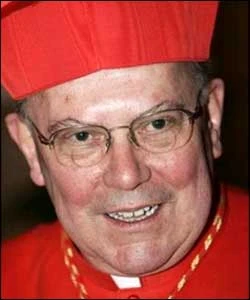 On this note, one of the most helpful aspects of the recent release—which deals not just with this document, but with all documents of such a caliber—is a Q&A section published alongside the actual instruction. The members of the Congregation wished to inform Catholics of the actual force of such a publication, in doctrinal term:
[Dignitas personae] is an “instruction” from the Catholic Church’s highest doctrinal agency, the Vatican’s Congregation for the Doctrine of the Faith (CDF), applying timeless moral principles to some new issues and situations arising from biotechnology. It does not declare a new infallibly defined dogma, but is approved by Pope Benedict XVI and has his authority. Like most Church teachings, its moral judgments are part of the “universal ordinary magisterium.” Catholics are called to inform their consciences with such teaching, adhering to it with “religious assent” (Catechism of the Catholic Church, no. 892).
In my mind, the Holy Office has addressed two popular topics with one fell swoop: bioethical dilemmas as well as the importance of the depositum fidei in the life of the Church. Tanti auguri, Cardinal Levada!
Preference for Poverty is Universal
Posted by Andrew Haines in Church Doctrine, Theology on 11.10.2008
Some may remember a post I wrote a while back concerning the Church's notion of a 'preferential option for the poor.' I think that now would be a good time to revisit this idea, and consider it especially in terms of our current economic and social situation (particularly as they occur around election time).
But that's a pretty rough sketch of things. None of us experiences life as some kind of clearly delineated progress from phase to phase. No one thinks in such stratified categories. The interplay between the three levels I tried to identify above is very fluctuant. But I think most theologians would agree that something like this model needs to be upheld if the Church will be able to function properly and for the sake of its goal, salvation.
With this in mind, where does a 'preferential option for the poor' fit into the schema. I think it is clear: it is a top-level priority, which facilitates sanctification both for the poor and for those who serve them. It is, in other words, something indispensable in the life of the Church, and something well above a personal devotion or private expression of faith and value. The manifold writings in Catholic tradition regarding social justice are evidence of this fact. We cannot, as Catholics, seek to somehow circumvent such a primary and fundamental act of the Church in order to further lower level expressions of our faith. It is precisely our faith that makes a preferential option for the poor what it is.
Perhaps the largest question arises when one considers: 'What things are we to consider as "poverty"?' This is, after all, really the question at the heart of any preference for the poor. Certainly, material poverty makes human beings 'poor'. Just as plainly, emotional and social poverty are a growing cause of 'poor' people in our society today. Finally—and closely connected with social poverty—the depravation of fundamental rights to life is perhaps the most notable form of poverty, especially in most affluent Western countries. All of these are forms of poverty. They deprive the human person of the most basic needs, which must be met in order to survive, and to live in a way that fosters a love of Christ and an appreciation of the faith of his Church.
Finally, perhaps the most important thing to remember when speaking of a 'preferential option for the poor' is that poverty is not something we will eradicate. The poor will always be with you, Jesus tells us. Rather, we would do well to consider poverty as a mystery—as an insight into the life of the Trinity. By seeking to aid those who are poor, we will in turn make ourselves spiritually poor. And it is this holy self-emptiness that most reflects the self-gift of Father to Son and Son to Father by the procession of the Holy Spirit.
The 'Soul' of Democracy: Christianity
Posted by Andrew Haines in Church Doctrine, News, The Holy Father on 11.06.2008

Dear President-elect Obama [wrote Cardinal George],
I write to you, in my capacity as President of the United States Conference of Catholic Bishops, to express our congratulations on your historic election as President of the United States. The people of our country have entrusted you with a great responsibility. As Catholic Bishops, we offer our prayers that God give you strength and wisdom to meet the coming challenges.
Our country is confronting many uncertainties. We pray that you will use the powers of your office to meet them with a special concern to defend the most vulnerable among us and heal the divisions in our country and our world. We stand ready to work with you in defense and support of the life and dignity of every human person.
May God bless you and Vice President-elect Biden as you prepare to assume your duties in service to our country and its citizens. (ZENIT)
Benedict's letter, unlike the cardinal's, was not published due to its "personal nature." However, I think it's fair to say that it expressed much of the same.
So what does this say about the Church and politics? What does it tell us about our own involvement in the political sphere beyond election day? I think the most reasonable conclusion is that the Church, as it has always taught, does not see political involvement solely in terms of elections and vying for political offices, in the sense that secular society portrays it. In Centesimus Annus, Pope John Paul II writes that the Church "values the democratic system…[which] is possible only in a State ruled by law, and on the basis of a correct conception of the human person." This seems to imply that what seems manifestly 'democratic'—i.e. the electoral and representative process we see in the US—is only possible due to the laws of the state it governs, and the adherence to these laws in cases concerning human dignity. Moreover, the pope goes on to say (in a 2000 letter to Cardinal Vlk) that the Church "has a specific contribution to make; not only can Christians join all persons of good will in the realization of this great project [of political activity], but they are also invited to be in some way its soul by showing the true meaning of the organization of the earthly city."
What John Paul II tells us is clear: political life isn't a once-in-four-years phenomenon. It is a sustaining presence and, in the words of the pope, the very "soul" of a democratic government. It is up to Catholics, with the support of their bishops, cardinals and pope, to maintain the efforts toward life so ardently offered in the time leading up to this year's presidential election. Now is when the moves for the next pro-life changes are initiated. Now is when we take up the task of becoming the "soul" of democracy by our witness to the fundamental dignity of life.
Problems Are Bigger Than Slogans Allow
Posted by Andrew Haines in Church Doctrine on 10.01.2008
As I was walking through the parking lot at school this morning—all the way to the end, past all the other cars—I noticed once again the abundance of "pro-life" bumper stickers plastered all over anything from a 2009 Honda to a 1973 Buick. Anything that has a bumper (or had one at some point) is worthy of a sticker around here. Although the theme of most, as I mentioned, has something to do with a pro-life message, the actual catch phrases are all quite different. The difference led me to writing this post...
Without detracting from the enthusiasm of those who enjoy publishing such views in the form of automotive advertisement, I think we are called—as pro-life Catholics—to something higher than slogan slinging. We are called to something more magnificent than uttering pithy responses to questions which we (often wrongly) assume pro-choice factions are asking themselves. They don't want to know that children are not choices, or that abortion kills living cells. They don't even want to know if we think abortion is murder (implying that a person is involved). They want to know why we believe that the unborn are human beings just as much as you and I are human beings. The perplexingly naive positions of public figures, like Nancy Pelosi, on topics of human life and conception lend further evidence to the urgent need for education and not simply partisan enthusiasm. This question of "why" is much harder to answer than the question of "if" we believe abortion is murder. Of course we do, but can we explain it? And if so, can we explain it intelligibly?
Above all else, prayer will be the key to stopping abortion in America. Alongside prayer, it is an education as to why the Church believes and teaches what She does that will inform hearts and minds to pursue the overturning of Roe v. Wade, and the reconstruction of the legal parameters regarding the multifarious "life issues" we hear about so often. Let us not forget that the Church's mission to spread the Good News of Christ to all nations is likewise a call to inform the world of the Eternal Logos, whose Truth governs reality, and who we can come to know by our experience and knowledge in this world.
Is there a catchy way to put that on a bumper sticker?
Protons & Proto-Inquiry
Posted by Andrew Haines in Church Doctrine, News, Philosophy on 9.10.2008

As a Catholic, I am very open to the role of scientific research in man's fullest manifestation of himself. After all, as Aristotle tells us, "All men by nature desire to know." What is science other than a systematized basis for coming to know things? If the desire to know is fundamentally natural, it should be treated as are other natural desires; the desires for sleep, food and sex, to name a few. The bottom line: nature is good, and so are the desires it engenders. But, as Aristotle also tells us, "Virtue is in the middle." In other words, extremely impulsive acts—as well as extremely restrictive acts—cannot be a form of virtue, and thereby are deficient in truly articulating human nature in its fullest sense. Just as the appetites for food and sex need to be enjoyed in moderation and within their proper context (viz. hunger and marriage), so too does the desire to know need to be understood within the context of humility in the face of God's infinitude.
All too often, something surfaces in the news that has some group labeling the Catholic Church as being restrictive of 'academic freedom,' 'scientific innovation' or something of the like. Just as often, they cite the locus of such an apparent dilemma in the person of the Roman Pontiff, who so often defends the Church's positions on issues which do not change, despite popular culture's conceptions thereof. But here's something to consider: If I had to make a guess, I bet Pope Benedict XVI was just as excited as me when he turned on his television and caught word of the LHC's successful trial run. Although the pope and I disagree with the prospect of the Big Bang as a viable cause for the universe coming into being, the idea of coming to know more about the world in which we live is nevertheless exciting. The key, I think, is realizing the true beauty of scientific discovery in light of the truths of revelation, which we profess and adhere to as Catholics.
So long as our gaze remains fixed upon the fundamental questions, all the scientific knowledge and learning in the world won't become a problem for us. It is only when we let knowledge control us to the point of acting impulsively that something truly sub-human is occurring. "All men by nature desire to know," indeed. But nature is not the end of man. God is the end of man, and we must continuously realize that all the knowledge in the world is limited to just that—the world. Knowledge of the divine is, however, Wisdom, and transcends both our capacity to understand as well as our capacity to live on this earth. Someday we will die, and someday we will encounter Truth in himself. That seems to me an incredibly fulfilling prospect!
Pelosi's Poor Theology
Posted by Andrew Haines in Church Doctrine, News, Theology on 8.27.2008
Nancy Pelosi teaches us an important lesson in the distinction between catechetics and theology: they aren't the same thing.
After she was elected to Congress, and the choice issue became more public as she would have to vote on it, she studied the matter more closely. Her views on when life begins were informed by the views of Saint Augustine, who said: ‘…the law does not provide that the act [abortion] pertains to homicide, for there cannot yet be said to be a live soul in a body that lacks sensation…’ (Saint Augustine, On Exodus 21.22)
No surprise to any serious scholar of Catholic thought is the fact that the views of saints do not always express the views of the Church. Although saints—and particularly Fathers and Doctors of the Church—attain such recognition by thinking and acting in accord with the faith of the Church, and by pursuing virtue and holiness to a degree that is exemplary and commendable, they are still humans with human opinions and biases. This is precisely one of those examples.
Amidst the onslaught of reprisal from Church authorities (one unprecedented in recent years), US bishops sought to establish just what the position of the Church, in relation to the ideas of saints such as Augustine, really states.
In the Middle Ages, uninformed and inadequate theories about embryology led some theologians to speculate that specifically human life capable of receiving an immortal soul may not exist until a few weeks into pregnancy. While in canon law these theories led to a distinction in penalties between very early and later abortions, the Church's moral teaching never justified or permitted abortion at any stage of development.
These mistaken biological theories became obsolete over 150 years ago when scientists discovered that a new human individual comes into being from the union of sperm and egg at fertilization. In keeping with this modern understanding, the Church teaches that from the time of conception—fertilization—each member of the human species must be given the full respect due to a human person, beginning with respect for the fundamental right to life.
The advance of modern science does not, thus, enable us to condemn St. Augustine as a liar or heretic. He was a product of his environment, scientifically speaking, and was therefore confined to the conceptions of procreation available in his historical period. Nancy Pelosi, and other Catholic politicians, are similarly products of their historical matrix, and are responsible for discerning truth insofar as truth is discernible. It is not appropriate nor just to point toward a medieval conception of reality if modern conceptions and demonstrations of reality prove otherwise; to such would be a denial of man's ability to reason and develop over the course of time, and an ultimate disavowal of his dignity as a rational creature.
What I find most perplexing about this whole matter is that no self-respecting politician nowadays would point to the Middle Ages as a basis for understanding the role of women in the workplace, or in society at large. They would be criticized as supporting chauvinistic and dated views. But to identify a medieval theory of human conception as scientifically valid is not only permissible, for some politicians, it is laudable. "While Catholic teaching is clear that life begins at conception," continued Pelosi's spokesman, "many Catholics do not ascribe to that view." Perhaps Nancy Pelosi and her colleagues in thought are simply ahead of the curve, jumping ahead of what the Church recognizes as true. Or perhaps she is afraid to admit that her position is indefensible. Either way, you can be assured, Saint Augustine is rolling in his grave.
The Road Less Traveled
Posted by Andrew Haines in Church Doctrine, News, Theology on 8.05.2008
In light of my forthcoming academic ventures (and the title of this blog), I thought this bit of news was appropriate...
Quite noticeably present among the up-and-coming scholars of the Catholic world—my peers and I in particular—looms the ever dangerous tendency of finger-pointing. Often we are not allowed to forget it, as it quite regularly comes to the fore as a major criticism from older generations of scholars: "...this conservative movement amongst the young people in the Church... grumble, grumble." Certainly these conservative and, as I would prefer to consider them, more orthodox trends in thought are not equal to finger-pointing. But, nevertheless, the former does quite often seem to give way to the latter. Indeed, both sides of the "conservative/liberal" debate can be duly charged and found guilty of such offenses.
But when I read this story I was encouraged. Finally, an exemplary case of what should and can happen when it comes to dissidence and orthodoxy. Moreover, it is a vital example of the early Church's model of public penitence and reparation, illustrating its life-giving effects.
As the story goes, a former Catholic priest who had signed a document protesting the publication of Humanae Vitae in 1968 recently wrote to Human Life International, asking forgiveness for his dissident actions. The man—a practicing Catholic who raised his family in the Church after being laicized by Pope Paul VI—expressed in his letter that by openly assenting to Catholic doctrine, he hoped to experience "a peace of mind and heart that [he had] not experienced since 1968." By publicly denouncing his former dissidence, the man rejoiced that his "repudiation of the Protest is now known and accepted in a kind of semi-official sort of way by an 'authority' in the Church." "Thank you for reading this," he concluded his letter, "thereby humoring an old man, who despite everything else knows that he is a 'priest forever, according to the Order of Melchizedek.'"
I think we can learn a lot from this most unpopular but truly humble avenue of reconciliation with the Church and her teachings. Finger-waving cannot be our goal as Catholics, no matter the issue of concern. Perhaps if we prayed for the conversion of dissident thinkers and stopped deriding them with coarse ridicule, we would actually promote an attitude of more genuine dialogue, and prepare the ground for true conversion of heart. Truly praying and honestly discussing, however, is a thing much easier said than done.
The Church: Essential Unity
Posted by Andrew Haines in Church Doctrine, Church Fathers, Theology on 6.15.2008
Thanks to all of you who commented and/or promised your prayers for my continued discernment of God's will. I truly appreciate being so joyfully commended to the Lord's loving Providence. I do not doubt that he will manifest himself all the more clearly now that he has lead me to this new nexus of prayer and study. Again, thank you.
Viewing the "Church" as some external, inanimate object is a basic stumbling block for many. Clearly, the Catholic Church is not the brick or wooden church where we celebrate Mass. Neither is St. Peter's Basilica in Rome. Nor is it the college of bishops or Cardinals. It isn't even the pope. While all of these are indispensable elements of an authentic "Church," none alone suffice in constituting it. In addition, it is wrong to think of the Church as the mere ideas professed by the Church; i.e. the moral and doctrinal teachings which we understand to be Catholic are not the Catholic Church itself. While ideas are 'spiritual' and not simply material and inanimate, they nevertheless derive their significance and 'dynamism' from those who profess to hold them.
In the end, the true "Church" is constituted by the whole body, or assembly, which calls itself and is authentically attempting to be Catholic. The Church is formed in the "image of God," just as man: Saint Irenaeus or Lyons explains the bishops as having the role of God the Father, giving life to the rest of the community under their care. The assembly, then, as the "Body of Christ," partakes in the role of God the Son. Binding the two in unitive love, finally, is the Holy Spirit, functioning in the Church just as fully as he functions in the intimate life of the Triune God. Not only is the Church the image of God, the Catholic Church is truly the "mystical body of Christ." We come to know the Trinity by realizing the saving mission of Jesus Christ, and in his establishing the Church to continue that same purpose. As such, the unifying role of the Holy Spirit is utterly essential to the existence of the Church. Without unity in the Holy Spirit, there is no Church.
Seeing all of this, it gives me great comfort to know that so many are praying for me. Likewise, it should comfort each one of us to know that we are in union with so many others in the one Body of Christ, and that our bond is nothing less than the Third Person of the Trinity himself! We ought never to forget the obligation we have, then, to pray ceaselessly and to do all things in order to strengthen and manifest that bond, which God himself has graciously entrusted to his Church.
Eminent Mission for Chinese Catholics
Posted by Andrew Haines in Church Doctrine, The Holy Father on 6.10.2008
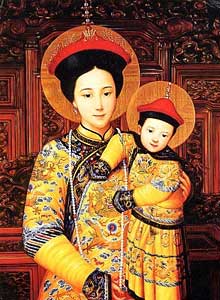
I wish, therefore, to convey to all of you the expression of my fraternal closeness. With intense joy I acknowledge your faithfulness to Christ the Lord and to the Church, a faithfulness that you have manifested “sometimes at the price of grave sufferings,” since “it has been granted to you that for the sake of Christ you should not only believe in him but also suffer for his sake” (Phil 1:29). Nevertheless, some important aspects of the ecclesial life of your country give cause for concern. Without claiming to deal with every detail of the complex matters well known to you, I wish through this letter to offer some guidelines concerning the life of the Church and the task of evangelization in China, in order to help you discover what the Lord and Master, Jesus Christ, “the key, the centre and the purpose of the whole of human history” wants from you.
And what is it that Christ wants of his Church? Be it in China or elsewhere—America included—the mission of the Church “is to proclaim Christ to men and women, as the Savior of the world, basing herself—in carrying out her proper apostolate—on the power of God.” (Letter, 4) Specifically notable of the case of the Church in China is the issue of atheism, which no doubt permeates modern thought, society and culture, and is the fundamental obstacle of the Catholic Church (in my opinion) in the twenty-first century. This apostolate to preach Christ as Savior, relying “on the power of God,” speaks strongly of the effects of atheistic thought. The ‘power of God’ has been all but forgotten, and the power of governments and man has been assumed as the summum bonum toward which we ought to strive. In short, modern atheism (as I have written about before) is not so much an absence of the divine as most would believe, but rather an imposition of something finite and base into the realm of divinity. For Feuerbach, it was man’s absolute qualities; for Comte, it was ‘Humanity’; for Marxists and the Chinese government, it is the will of the state.
Struggling against the god of Communist ideology, the Church in China is in a perfect place to show the rest of the world just what it means to truly be Catholic. Not only is the Enemy utilizing the Beijing government itself to suppress authentic Catholicism, but also the officially sanctioned ‘Catholic Church’ of China, whose doctrines and clergy are both subjugated to the authority of the state. In addition, the authentic Church is battling the centuries-old mentality of the East, which has always been highly critical of all western influence, and in particular western religious and moral views. Catholic martyrs in China—particularly Jesuit and other religious missionaries—give evidence to the gravity of this situation. Nowadays, the martyrs are much less known, but without doubt there are still great amounts of blood being shed for the faith each day. As Tertullian writes, “the blood of martyrs is the seed of Christians,” and the fruit to be borne from such suffering and struggle will certainly show forth the glory and Providence of God, just as the blood of the old martyrs has given abundant life in the countries where they preached.
We ought not to lose focus on the goal of the Christian mission: to teach Jesus Christ as Savior of all men and women, and to rely in all things on the power of God. This charge of Pope Benedict is particularly relevant in today’s relativistic and consumeristic world, and no doubt will be the labor of the Church until Christ comes again to reclaim all things for himself.
Healthcare & Natural Law
Posted by Andrew Haines in Church Doctrine, News on 6.08.2008
The recent case of an Oregon woman whose cancer medication fell outside the bounds of her healthcare coverage shocked me a little. I suppose its only to be expected that insurance would not cover something altogether necessary for healthy survival, that's just the way things often work. But to hear that the same coverage would pay for "palliative care," including assisted suicide, caused me to question just what precisely is meant by the term "healthcare" anyway.
But at any rate, and even if they did cheat, there is another level of truth that is far more fundamental than opposition in terms that needs to be considered. That truth is called "natural law," and has always been the constant guide of the Church in matters of morality. Saint Thomas Aquinas says that natural law is "nothing else than the rational creature's participation in the eternal law." In other words, it is man's natural involvement in the divine Wisdom that created and rules all existence. By virtue of his own existence, the human person is subject to the laws of all existence, which for the Christian (and I dare say any theist) are the laws of God. Moreover, they are not the laws of God as promulgated in the Ten Commandments or other revelation, but rather the underlying law of God written on the human heart from its very conception. Natural law is just that: "natural."
The case of healthcare providing coverage for assisted suicide is a stark contrast to the natural law. Almost anyone would agree that killing innocent human life is a moral evil. Even the most radical murderers view their killings as in some way vindictive toward a supposed evil present in the their victims, or else the achievement of a higher good through the death of innocent life. Assisted suicide falls under this final category; those murdering innocent persons believe they are accomplishing a higher good for them in the end. This, however, is not natural law. Natural law seeks the good of the person in the natural order, i.e. the preservation of life. Assisted suicide presupposes a sort of divine act on the part of the killer, wherein they feel it is their responsibility to supercede the natural order and take all life into their own hands. In short, they assume the role of God, and essentially deem it appropriate to judge between life and death. Assisted suicide, as it completely opposes the possibility of "health," might rather been seen as a "mercy killing." The problem here is that all mercy, if it is authentic, is dispatched from the throne of the Almighty. Nowhere does God condone such action. In no way can 'mercy' be achieved through murder. It is another fundamental contradiction in terms, and one that ought to be taken into account when "healthcare" providers hire new executives. Just look at their SAT scores.
Justin Martyr & Rational Religion
Posted by Andrew Haines in Church Doctrine, Church Fathers, Theology on 5.12.2008

But we have received by tradition that God does not need the material offerings which men can give, seeing, indeed, that He Himself is the provider of all things. And we have been taught, and are convinced, and do believe, that He accepts those only who imitate the excellencies which reside in Him, temperance, and justice, and philanthropy, and as many virtues as are peculiar to a God who is called by no proper name. And we have been taught that He in the beginning did of His goodness, for man's sake, create all things out of unformed matter; and if men by their works show themselves worthy of this His design, they are deemed worthy, and so we have received of reigning in company with Him, being delivered from corruption and suffering. For as in the beginning He created us when we were not, so do we consider that, in like manner, those who choose what is pleasing to Him are, on account of their choice, deemed worthy of incorruption and of fellowship with Him. For the coming into being at first was not in our own power; and in order that we may follow those things which please Him, choosing them by means of the rational faculties He has Himself endowed us with, He both persuades us and leads us to faith. And we think it for the advantage of all men that they are not restrained from learning these things, but are even urged thereto. For the restraint which human laws could not effect, the Word, inasmuch as He is divine, would have effected, had not the wicked demons, taking as their ally the lust of wickedness which is in every man, and which draws variously to all manner of vice, scattered many false and profane accusations, none of which attach to us…
What sober-minded man, then, will not acknowledge that we are not atheists, worshipping as we do the Maker of this universe, and declaring, as we have been taught, that He has no need of streams of blood and libations and incense; whom we praise to the utmost of our power by the exercise of prayer and thanksgiving for all things wherewith we are supplied, as we have been taught that the only honour that is worthy of Him is not to consume by fire what He has brought into being for our sustenance, but to use it for ourselves and those who need, and with gratitude to Him to offer thanks by invocations and hymns for our creation, and for all the means of health, and for the various qualities of the different kinds of things, and for the changes of the seasons; and to present before Him petitions for our existing again in incorruption through faith in Him. Our teacher of these things is Jesus Christ, who also was born for this purpose, and was crucified under Pontius Pilate, procurator of Judaea, in the times of Tiberius Caesar; and that we reasonably worship Him, having learned that He is the Son of the true God Himself, and holding Him in the second place, and the prophetic Spirit in the third, we will prove. For they proclaim our madness to consist in this, that we give to a crucified man a place second to the unchangeable and eternal God, the Creator of all; for they do not discern the mystery that is herein, to which, as we make it plain to you, we pray you to give heed.
The Quest for a "New Humanism"
Posted by Andrew Haines in Church Doctrine, Philosophy, The Holy Father, Theology on 4.15.2008
One idea that is very evident in my own personal study of philosophy and theology seems to be the question of ‘humanism’: what is it and why is it important? The exaltation of the human person, as pagan as it has often become, is nevertheless an integral part of Catholic thought, specifically insofar as Jesus Christ presents to us the perfection of human nature as manifested in a divine person. Moreover, in addition to my private interest in this question of humanism, it also appears to be one of the foundational points in the thought of Pope Benedict XVI, and certainly one of the most talked-about ideas in modern Catholic academia; writers like Luigi Giussani and Henri De Lubac do wonders in presenting the challenge as one both of importance and feasible consideration. But how imminent is the need to reflect upon such an issue that oftentimes seems forever aloof and ultimately unattainable?
“True and lasting peace is unimaginable without the development of each person and of all peoples,” writes Benedict. “Nor is it conceivable to think of reducing arms if first we do not eliminate violence at its roots, if man does not first turn decisively to searching for peace and for what is good and just,” namely the meaning of human life. Like all things Catholic, the answer to the question is bigger than the question itself; realizing how to promote true justice and peace is something only captured in the fullness of the Catholic Tradition, and in a deep-seated love for Christ in the sacraments and in the people of God. The Holy Father agrees, that “it will be difficult to find a solution to the various technical problems [of national security and disarmament] without man’s conversion to good on a cultural, moral and spiritual level.” We must not be primarily concerned with security, but rather with our vulnerability before the Almighty God. In recognizing our weakness as human beings—in need of salvation through Christ—the prospectus of viable solutions to more tangible problems becomes clearer and ever more achievable.
This is precisely the import of the ‘new humanism’ called for by Catholic intellectuals the world over. “The future of humanity depends upon a commitment on everyone's part,” concludes Benedict. “Only by pursuing an integral and solidary humanism…can humanity progress toward the true and lasting peace for which it longs.”
[cf. Vatican Information Services article for a full report on the pope's letter to Cardinal Martino.]
Architecture: Our Disposition Toward God
Posted by Andrew Haines in Church Doctrine, Liturgy on 4.08.2008
Church architecture has a major role to play in the way we experience the Lord. When we walk into a church that draws our attention toward his magnificence, we can’t help but be somewhat mystified by the beauty of our glorious God; his eternal splendor is shown in some small part through the earthly edifice. However, when we walk into a church that has been constructed not necessarily to give glory to God, but rather to the exaltation of the human person, and toward human progress in autonomy and ‘creativity,’ the difference is immediately clear; we immediately realize the elements of transcendence and mystery are lacking. Although beautiful and prayerful churches can and have been built in almost any style under the sun, the simple and fundamental fact—which we know through these basic experiences—is that some styles are just better suited for showing God, and some better suited for showing man.
Understanding the faith means understanding the “source and summit” of the faith: namely, the Eucharist. Jesus Christ present in the Eucharist is not only the highpoint of the faith, but most obviously of the liturgy; this has been the teaching since Apostolic times and will surely never change. Thus, the primary consideration one must make in deciding on a church design is, “Will this design reverence and express our belief in Christ’s True Presence in the Holy Eucharist?” I would be so bold as to guess that the feeling we get when entering a church and realizing either God’s or man’s exaltation has much to do with this one point. If the Eucharist is not central in the construction of a Church, what does that say about our theology as Catholics? Both Christ present in the tabernacle and Christ present in the consecration of the Mass need to be given prime place if a Catholic church hopes to achieve its mission of correctly articulating the faith, and the true ‘work of the people’ to adore and worship the Son of God.
Really, the question of the human person and its pronouncement in places of worship ought to instead be considered as a question of the person of Christ, and his presence in the place of worship. By turning in on himself, man ultimately idolizes himself. However, by turning toward the Lord—Conversus ad Dominum, as the ancient Church prayed—we find an expression of humanity much more beautiful and meaningful than anything we could muster on our own. So too do we find a way to integrate that humanity with the humanity of the Son of God, giving great glory to God, Father, Son and Holy Spirit, and living out most eloquently the faith that we profess in the liturgy of the Mass.
Saint Justin Martyr on the Trinity
Posted by Andrew Haines in Church Doctrine, Saints, Theology on 4.07.2008
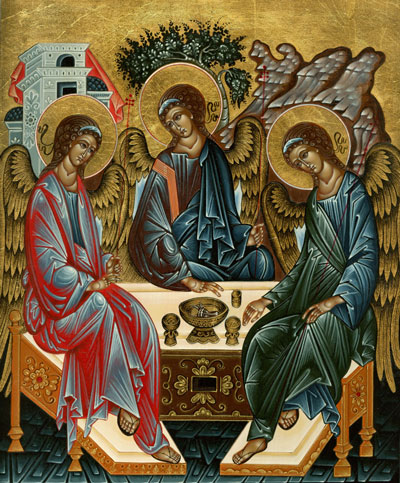
I think St. Justin’s analogy draws its force from our primal fascination with fire, the same fascination that wound up granting fire a key place in the high celebrations of the Catholic liturgical life (i.e. the Easter Vigil, baptisms, and at every Mass in the candles on the altar and in the procession). We obviously see fire as something bordering on the transcendent: it destroys yet brings life; it is a glimpse of the redemptive suffering of Christ on the Cross. There is just something mesmerizing about fire and about light. Even Jesus says that he is the Light, and that he has come to set the earth on fire. How fitting then that Justin uses this foundational element of human existence in expressing the mystery of Trinitarian existence.
In Justin’s analogy, just as one can light a second flame from a first, so too the Son is begotten of the Father. The Son’s existence, like the second flame, does not diminish the brilliance of the first Flame; both shine just as brightly as the other. Similarly, the Holy Spirit is a third flame, formed form the first two and shining just as brightly. While we can distinguish between the ‘flames’ proper—that is between their function as individual tongues of fire—we cannot distinguish between their substantial composition: they are all three fire. This relationship of ‘consubstantiality’ between the three flames is directly related to the consubstantial relationship of Father, Son and Holy Spirit; we can distinguish their function as Persons, but never their substance, since they share in one substance and are therefore one God.
Saint Justin Martyr, an early Father of the Church, was steeped in the tradition of Greek philosophy, so using earthly elements to convey transcendental truth was not uncommon. What amazes me about his analogy is the beautiful clarity with which we see a reflection of the divine in the spatio-temporal world. Although we cannot capture the mystery of God in words or even in thought or analogy, we must inevitably see the image of the Trinity in our daily experience, just as a reflection is seen in a mirror. If we capture the reflection, we have destroyed its nature, for then it is no longer a reflection of a higher reality but an independently existing one that is tangible and ‘real.’ The same is true of our perception of the Trinity in the world; if we were to capture it completely with our minds, it would no longer be a mystery, which is essential to its nature as the transcendent and divine being. Justin saw this clearly, and he expressed it beautifully. Hopefully his brilliant reflections and humble submission to the almighty power of God—Father, Son and Holy Spirit, consubstantial with one another yet distinct in their personhood—will inspire us to further submit our own intellects and wills to so great and majestic a Deity as the Holy Trinity.


