'Exceptional Growth' in Africa
Posted by Andrew Haines in News on 10.31.2008
When in doubt, just turn to the poor of the world for confirmation in the mission of being Catholic. It happens time and time again, and this time it's with Africa. According to ZENIT, next October's synod will focus on the Church in Africa, discussing it's "exceptional growth" in recent years, and will consider the future of the local church in the coming years. "The idea for this synod arose during the last years of Pope John Paul II's pontificate... The Polish Pontiff had already welcomed the idea in 2004. In 2005, Benedict XVI announced his plan to convoke the assembly, which will be a continuation of the first Africa synod, held in 1994." (Full article here.)
So what kind of things are so "exception," you may be wondering. Well, here are a few statistics about Catholicism in Africa: since 1994, there has been an overall growth in number of bishops by 18%, and in number of diocesan priests by 58%. Also, realizing that a hundred years ago Africa had only 2 million Catholics, it is startling to consider that today, a mere century later, the continent is home to over 150 million (17% of it's total population).
[Archbishop Eterovic] affirmed that the Catholic communities [in Africa] are active and committed: "Religious practice has a high rate, especially regarding participation in Mass on Sundays and holy days. In some countries, the rate of religious practice is around 80%."
This explains, he said, "the high number of vocations to the priesthood and the consecrated life. […] In sum, Africa is not a mission land in the passive sense, but rather it sends missionaries, both for the continent itself and for the whole world."
This much is clear for almost anyone who lives in a US diocese nowadays, since in recent years African priests and nuns have come to the rescue in places with shrinking presbyterates and religious presence. In Rome—as I recall—a substantial portion of almost all my classes was made up of African seminarians, priests and religious, sent to study in Europe for mission or domestic work after receiving their degrees.
But in light of all the progress, Africa still maintains an atmosphere of overwhelming uncertainty and political unrest. The purpose of the upcoming synod, in part, is to discuss the Church's presence on the continent with particular regard for the heightened inter-tribal tensions in recent years, as well as the growing number of African Muslims who are currently making up a significant portion of the land's population. "'Reconciliation is a priority need in Africa, in which progress is not lacking, but neither are problems,' the [Eterovic] affirmed. 'Without the true peace in Christ, there cannot be any cultural or social development. The Church should be a prophetic voice that invites to reconciliation, justice and peace.'"
November 4th in Sight
For the past few months I should have retitled the blog, In Umbris Diei Comitialis. (We'll see who gets that one...) But finally, it seems that I'm resurfacing from the murky depths of politics into the refreshing shadows of St. Peter's.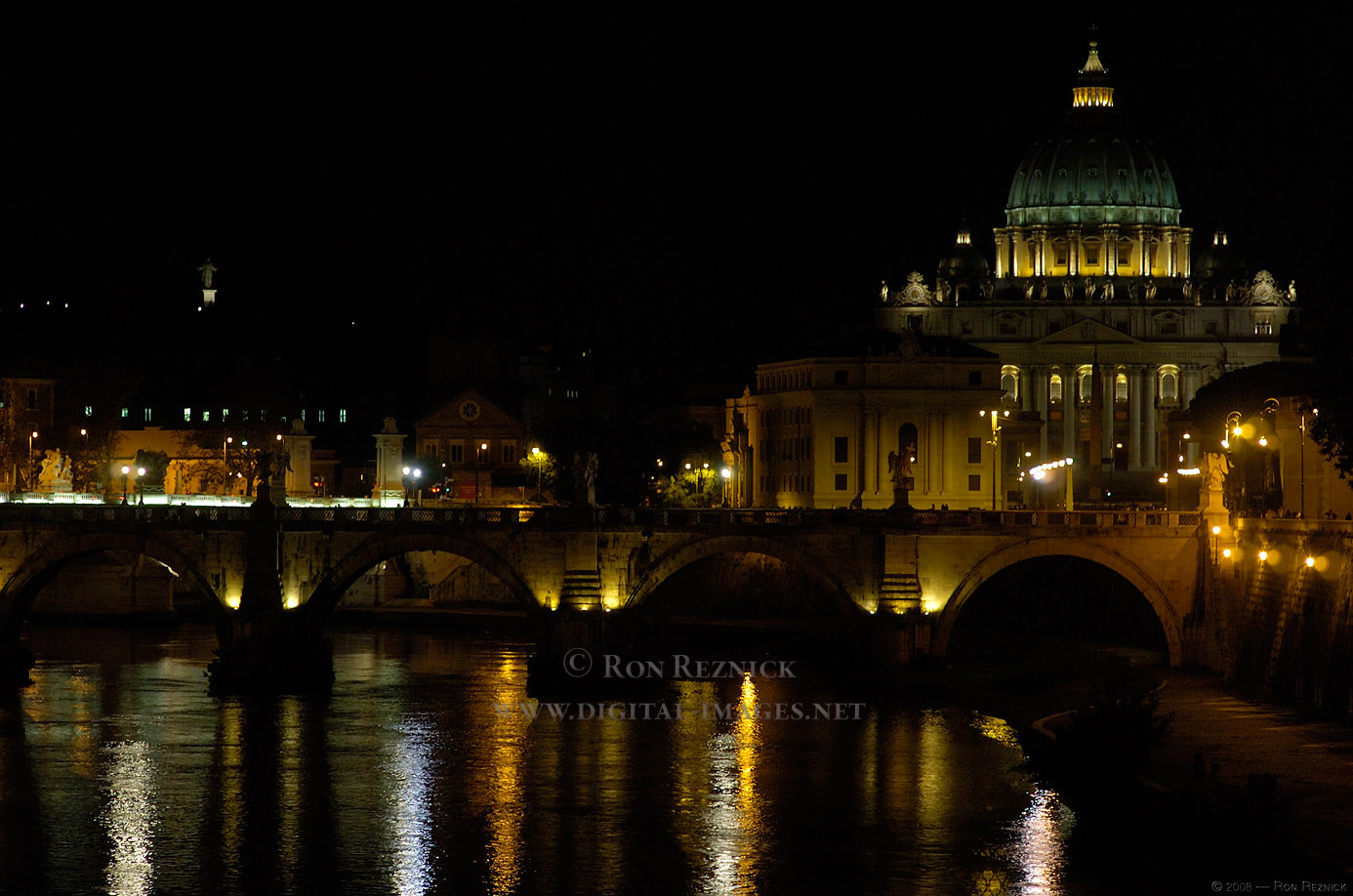
So, I thought this would be a good chance to address my brothers in Rome, who are truly living in those shadows, and whose experience of the universal Church is indeed as enviable as it is humbling. Living in Rome—and perhaps even in the Vatican—isn't really an experience that you can describe, especially from the standpoint of experiencing the faith. Anyone who's been to the Eternal City can tell you, there's just something about it, and about the Church in her midst, that makes you feel really good about being Catholic. Walking through the pope's backyard, around the tombs of his predecessors, and even eating at Benedict's favorite German dive (Tirolese) are just a few of the Catholic-Disneyland experiences I rank among my favorites. Those are the things that people enjoy hearing about; the things that make them want to make a trip to Rome.
But the thoughts that provide me with the sincerest memories are the things I got to see outside the public sphere of tourism and ecclesial pomp. Visiting the children at Bambino Gesu Hospital; talking to Florentina, Mario, Nicholai, Olympia, Brasilia and the other poverelli on the way to and from the Gregorian in the mornings; soaking up Italian culture on Saturday strolls down the Via Giulia; drinking two or three cappuccini in a single day; watching the sun rise over the Alban Hills on cool mornings before Lauds; watching the sun set on sweltering evenings beyond the Villa Doria Pamphili; hearing the bells of St. Peter's chime eleven o'clock, just down the street.
I love Rome. And I enjoyed living in umbris Sancti Petri. But now, it's my goal to make the shadows of that beautiful basilica—the beauty of the teaching that flows from it—accessible to others. And so, as the election season dies down, I look forward to focusing more and more on the ideas that prompted me to start this blog in the first place: the influence of Catholic thought and culture on us in the rest of the world. I hope that you have enjoyed reading, and that you'll keep tuned in for more!
Politics & Paradox

This pretty much sums it up. The consummation of months (years?) of campaigning, debates, hackery and speeches. After all of this MacIntyre-article-stuff for the last few weeks (most of which, I admit, was due to curiosity, but is turning more into conviction), I've come to the realization that Americans—for the most part—are horribly disinterested in politics. Political activity, for the common citizen of our country, would most likely be identified as campaigning, knocking on doors, sporting the latest "Country First" apparel, or spending entire days and tanks of gas trying to find opposition yard-signs to put one of yours right next to (effectively, I suppose, canceling one another out). It's enough to make one a little nauseous, and to make most people just simply not care anymore.
And I would ask, 'Is this really what we want for our country?' To the political leaders, slandering and backbiting one another, 'Is apathy the virtue upon which are built the great civilizations?' I'm no politician, but it seems that even power mongers should realize that pure contradiction is not the recipe for progress or growth.
Now, before this all sounds too romantic, I do realize that politics has never been a very beautiful thing. The idea of political freedom, sure; the right of a pursuit of happiness, sure. But politics, no. So I don't realistically expect that what we are going through would be any different. But we have to admit that not only is this election season in the US particularly degenerate, but that the past few election years have noted a trend of continual decadence in the American political landscape. More corruption, more slander, more drivel and more 'ick.'
What are the things that Americans, in these relatively dark times of economic and political uncertainty, can fall back on? How can we force ourselves to take the time enough to care about the election process and all the garbage that goes along with it? After all, it is important. We just can't see it, sometimes. Maybe, in the midst of our wallowing at home, trying to save money and avoid streetcorner riots in the name of one presidential candidate or the other, we could all pop in a copy of Robert Bolt's, "A Man For All Seasons." The portrayal of St. Thomas More in the film is one of the best portrayals of a realistic-seeming saint that I can recall. His political involvement with King Henry VIII, the love he shows for his family, and his ultimate death at the hands of a nation that grew to hate him most viciously for his defense of Truth...it all seems rather fitting. And if only we could all live up to his famous maxim: "I die His Majesty's good servant, but God's first." Sir Thomas more is the model of a faithful citizen. He's also a saint. If that says anything, then maybe we are lucky after all to be living in such a time of political paradox.
Secondo l'Affetività del Cuore...
Posted by Andrew Haines in Biblical Commentary, Book Reviews, Prayer on 10.18.2008
Recently, I've been getting more involved in the Communione e Liberazione group on campus. Part of the regular routine of the 'School of Community' factor has been reading the works of Msgr. Luigi Giussani, the movement's founder and theologian. Without a doubt, Giussani's writings always leave you with a nugget of truth to consider throughout the next week, until you come back for a little more.
 This past week, the discussion came from a chapter, entitled "Obedience." The focus of this section—as much as we have talked about so far—has been the events surrounding Christ's multiplication of the loaves, and the subsequent call to eat his flesh and drink his blood. The two events, says Giussani, are not coincidental; they are, rather, providentially arranged so that after being nourished physically by the miracle of the loaves, the crowd finds itself hungering for more of the same. They seek out Jesus continually, until finally he is in a position to tell them something they need to hear. Something big.
"You follow me because I satisfied your hunger with bread, freely, but I offer you something else to eat; I give you my flesh to eat and my blood as drink. And he who eats of this bread and drinks of this blood will live forever." (Si Può Vivere Così, 136) The response to this invitation, a resounding disapproval. A few remain. "To whom else can we go? You have the words of eternal life," asks Peter. This part is well known.
But what occurs in the hearts of those disciples? What caused Peter to utter his words? It is this that Giussani focuses upon. "I don't understand this," he supposes Peter was thinking, "but if I go away from him, no one else can speak to me according to the desires of my heart." (138)
This idea of 'speaking to the heart' is absolutely pertinent to a discussion of obedience in the Christian sense. As Catholics, especially, we are called to an obedience to the truth as it is understood and taught by the Magisterium of the Church. This obedience, however, does not arise from some efficient causation—we are not compelled to obedience, for that would not be obedience but slavery. Neither is obedience appealing because it enables us to avoid punishment, since that is equally as unfree. Rather, obedience is appealing to the Christian precisely because it is a language aimed at the desires of the heart; it is the fitting response to the Lord's call to us that we should follow him and find eternal life and happiness in communion with his Son.
This causes me to wonder a few things. Namely, since human beings are quite obviously wired for happiness and goodness, why is it that we are so quick to act contrary to the desires of our heart? After all, it wasn't the case with Peter that the Lord introduced new desires to his being, but rather that he tapped into those already present. Assumably, the same would have been true for the crowd that left. Didn't Christ tap into their deepest desires as well? After all, he is God—he can do that! But why, then, did they so quickly leave him? No doubt they were scandalized, but why?
The answer, I think, arises from the same innately human locale as the desires of the heart. As human persons, we so often desire to construct our own conceptions of reality that we fail to see the ones planted within our very being as having any value. Often, we are so quick to put forth our own ideas of how things should fit together that we fail to see the coherence of the picture before our eyes. Even more, we fail to see that not only does the picture cohere with itself, but that it actually corresponds to reality as well!
This is exactly what Christ offers those to whom he gives his Body and Blood for food and drink. He speaks to the heart, completes the picture, and bestows a knowledge of reality so deep that it seems utterly scandalous. But, as Giussani presents to us, it is precisely because it seems so scandalous in the beginning that it is so truly fitting and magnificent in the end.
"The Only Vote Worth Casting..."
Posted by Andrew Haines in News, Philosophy on 10.13.2008
It's been a quiet week here at the blog. I've been occupied with studying for a midterm, researching for three term papers and preparing two presentations for the coming week. All in all, it's been a load of work. I'll soon be finished with my pressing assignments, though, and back to blogging on a more regular basis. For now, here's a curious (and brief) article about Catholic political activity by a philosopher from the University of Notre Dame (which has generated quite a buzz of attention.) Don't let the cliché subject matter dissuade you from giving it a read. It's very interesting. And I'd be curious to hear some comments:
The Only Vote Worth Casting in November
Alasdair MacIntyre
When offered a choice between two politically intolerable alternatives, it is important to choose neither. And when that choice is presented in rival arguments and debates that exclude from public consideration any other set of possibilities, it becomes a duty to withdraw from those arguments and debates, so as to resist the imposition of this false choice by those who have arrogated to themselves the power of framing the alternatives. These are propositions which in the abstract may seem to invite easy agreement. But, when they find application to the coming presidential election, they are likely to be rejected out of hand. For it has become an ingrained piece of received wisdom that voting is one mark of a good citizen, not voting a sign of irresponsibility. But the only vote worth casting in November is a vote that no one will be able to cast, a vote against a system that presents one with a choice between Bush's conservatism and Kerry's liberalism, those two partners in ideological debate, both of whom need the other as a target.
Why should we reject both? Not primarily because they give us wrong answers, but because they answer the wrong questions. What then are the right political questions? One of them is: What do we owe our children? And the answer is that we owe them the best chance that we can give them of protection and fostering from the moment of conception onwards. And we can only achieve that if we give them the best chance that we can both of a flourishing family life, in which the work of their parents is fairly and adequately rewarded, and of an education which will enable them to flourish. These two sentences, if fully spelled out, amount to a politics. It is a politics that requires us to be pro-life, not only in doing whatever is most effective in reducing the number of abortions, but also in providing healthcare for expectant mothers, in facilitating adoptions, in providing aid for single-parent families and for grandparents who have taken parental responsibility for their grandchildren. And it is a politics that requires us to make as a minimal economic demand the provision of meaningful work that provides a fair and adequate wage for every working parent, a wage sufficient to keep a family well above the poverty line.
The basic economic injustice of our society is that the costs of economic growth are generally borne by those least able to afford them and that the majority of the benefits of economic growth go to those who need them least. Compare the rise in wages of ordinary working people over the last thirty years to the rise in the incomes and wealth of the top twenty percent. Compare the value of minimum wage now to its value then and next compare the value of the remuneration of CEOs to its value then. What is needed to secure family life is a sufficient minimum income for every family and that can perhaps best be secured by some version of the negative income tax, proposed long ago by Milton Friedman, a tax that could be used to secure a large and just redistribution of income and so of property.
We note at this point that we have already broken with both parties and both candidates. Try to promote the pro-life case that we have described within the Democratic Party and you will at best go unheard and at worst be shouted down. Try to advance the case for economic justice as we have described it within the Republican Party and you will be laughed out of court. Above all, insist, as we are doing, that these two cases are inseparable, that each requires the other as its complement, and you will be met with blank incomprehension. For the recognition of this is precluded by the ideological assumptions in terms of which the political alternatives are framed. Yet at the same time neither party is wholeheartedly committed to the cause of which it is the ostensible defender. Republicans happily endorse pro-choice candidates, when it is to their advantage to do so. Democrats draw back from the demands of economic justice with alacrity, when it is to their advantage to do so. And in both cases rhetorical exaggeration disguises what is lacking in political commitment.
In this situation a vote cast is not only a vote for a particular candidate, it is also a vote case for a system that presents us only with unacceptable alternatives. The way to vote against the system is not to vote.
iTunes & 19th Century Nihilism
Posted by Andrew Haines in Philosophy on 10.08.2008
I'm pretty sure that iTunes might be one of the singular most indicative examples of the American will-to-own that I can think of. We all (that is, we all iTunes users) understand why. The days of hearing songs on the radio and simply enjoying them are long gone. Now, we have to know the title and artist's name before we even think about sitting back to soak in the music. If I like it, I want to own it. And if I don't like it, then just hurry on to the next song so I can find something to buy!
I suppose I'm not really addicted to iTunes. In fact, I believe that I have one of the smaller music collections of most people (my age) that I know. What I am writing about here is really more the perception of a forming mentality than an actual case study of addictive behavior. But, left unchecked, I have seen what it can become (viz. having so much music that you'll never have time enough to listen to it all, downloading illegally to appease your fixation with acquiring mp3's, etc.)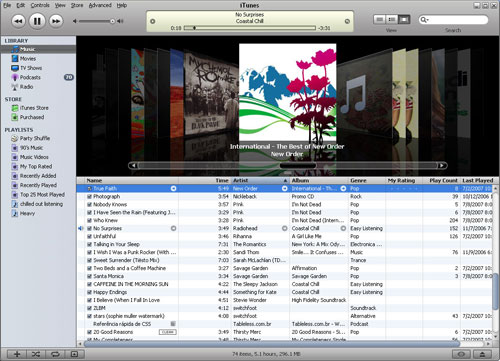
That being said (and my reputation being temporarily defended), the tendencies that such a mentality of obsessive acquisition engenders are just as bad as being actually addicted to downloading music. In fact, I would think, the mentality of 'will-to-own' might be even worse, since it is more open-ended and prone to various and, perhaps worse, manifest expressions. If we allow our character to be defined by what we can get our hands on, concupiscence won't allow us to stop at downloading music. Simply looking at the wanton acts of selfishness that occur daily throughout the world. People want more, and they are willing to go to great lengths to secure it.
Perhaps most destructive, though, about this consumeristic mindset is the proclivity to begin viewing invaluable items as purchasable. In other words, having the ability to buy whatever you want—even before you know what it is—makes one feel as though they are entitled to anything, and that anything has a price. This, of course, sounds cliché. But think about it: what does putting a "price" on something invaluable indicate? It is more than simply making attainable by human means something that lies outside the bounds of singular acquisition. It is, in actuality, presuming that we are speaking of a commodity manufacturable by human efforts, and contained within the scope of human production. We can buy pencils, cars, houses, even land (which is cultivated and prepared by human efforts). What we cannot buy are people, truth, beauty and goodness. There is, I would argue, a distinct separation between the two sets, and one that, even in America today, we haven't found a way to bridge.
The alarming thing about the 'will-to-own,' though, is that it realizes no bounds. It is, in many ways, a concrete and Westernized expression of the Nietzschean Wille zur Macht. Just go into Barnes & Nobles to find out how popular this nihilistic thinker is: nearly half the "Philosophy" shelf is dedicated to him. Then ask yourself if there is some connection between Übermensch and Überkäufer. I think there is and—in the spirit of Nietzsche—I think we are on the cusp of its simultaneous realization and demise.
"Termination"
Posted by Andrew Haines in News on 10.06.2008
It's not really the most audibly pleasing word in the English language, but it sure can have a nice ring to it, compared to the words it's often used as a substitute for: "We are going to have to terminate your employment, mister so and so," "Susie was terminated last week," etc. Heck, one of the first mental images "terminate" instills in me is of Arnold Schwarzenegger wielding a shotgun.
A lesser-realized yet equally-as-chilling usage of "terminate" comes to us today from the folks at the Down's Syndrome Association, where recent medical progress has heightened spirits. Really, the news starts as Stanford University (also known for their recent gridiron demise at the hands of the Fighting Irish), where Dr. Stephen Quake and a team of colleagues has been pioneering a form of Down's Syndrome testing for use in early-stage pregnancies.
Dr. Quake said: "Non-invasive testing will be much safer than current approaches."
One of the current ways of confirming the syndrome is amniocentesis, in which a needle is used to take a sample of the fluid within the womb.
Approximately one in 100 women who have the test will miscarry as a result, according to the Royal College of Obstetricians and Gynaecologists...
Dr. Quake said the new DNA test could be carried out at an even earlier stage of pregnancy than the current tests, giving women more time to make choices about their pregnancy. (BBC)
"What sort of choices," arises the question in the mind of the reader.
Carol Boys, chief executive of the Down's Syndrome Association, said: "There is no question that these non-invasive tests will be introduced in the next few years.
"It's therefore incredibly important that potential parents are given accurate information on Down's syndrome before they make a choice about whether to terminate or not.
"We don't consider Down's syndrome a reason for termination, but we recognise that bringing up a child with Down's syndrome isn't right for everyone.
 And so surfaces the topic of our post: "termination." Oddly enough, it does not come from the scientist experimenting with the testing, who incidentally believes his work to be beneficial for those seeking 'choices,' but rather from the woman defending the fetuses afflicted with this 'syndrome.' She doesn't want to call them people, I'm quite sure. Nor does she want to state the harsh reality that her careful choice of words highlights so blatantly. "Potential parents" is a dead giveaway: how can she believe the fetuses are human beings if the procreative agents aren't yet parents? But, then again, why head up an association that seeks to defend Down's Syndrome children if they aren't really 'people' until birth? Why not just "terminate" them all and get it over with? Perhaps she has a cozy job. Perhaps the "termination" of too many fetuses would infringe upon that. Perhaps she may even have to take a solid stance on the issue. But for now, she doesn't.
What is happening is murder, no matter how you choose to say it. And if the advocates of the poor and sick themselves will not stand strong in the face of public and social backlash, then who can?
Moral Uncertainty ≠ Political Might
Posted by Andrew Haines in News on 10.02.2008
For my daily dose of news I usually read the BBC, as opposed to any American news network, since it tends to be a bit more objective in cases of American electoral debates and foreign policy than does anything domestic. Usually, I think that holds true. But like anything, the BBC too has its shortcomings, and quite often they seem to surface by way of a distinctively non-theist bias toward many different sorts of stories and coverage. Simply reading the comments on some of their web-based articles—which reflect mostly the mentality of their British reader base—is enough to evidence this claim. Nevertheless, I think the decidedly non-theist bent is something increasingly popular in news reporting worldwide, and a phenomenon that we cannot overlook as a matter of sheer coincidence.
In a recent comparison of U.S. vice-presidential candidates, the British Broadcasting Corporation published a series of verbal blunders from each candidate in an attempt to predict a possible outcome of Thursday evening's debate. While most were somewhat alarming, some were simply funny; but one seemed out of sorts, and caused me to think a little deeper into the objectivity of the reporting. (Or at least, I should say, into the effort of the reporter to think critically and not simply superficially about the material being published.) The clip I am writing of is this:
Speaking to graduating students at her former Wasilla Assembly of God Church in June, Mrs Palin suggested a natural gas pipeline project had divine backing. "I can do my part in doing things like working really, really hard to get a natural gas pipeline, about a $30bn project that's going to create a lot of jobs for Alaskans and we'll have a lot of energy flowing through here. And pray about that also. I think God's will has to be done in unifying people and companies to get that gas pipeline built, so pray for that." (BBC)
The "problem" here, I gather, is an assertion that Sarah Palin seeks to invoke divine support for economic and commercial projects, and will similarly do so as Vice President of the United States. I, on the other hand, gathered something altogether different from the quote cited. It seems eminently important to consider, as part of the quotation, the context in which it was uttered. If she were speaking to the Senate, that would be one thing. But she wasn't. She was speaking to a group of graduates from a Christian college, and not just any college but rather her own alma mater. Is it really problematic, then, that she urged them to consider praying for a resolution to an issue of personal importance to her? Perhaps it may not have been the most prudent time to make such a statement, but the question is still: "Was it wrong?"
Unfortunately, as I've already noted a number of times, the continual tendency of U.S. citizens expecting lawmakers to be devoid of personal convictions—religious especially, but otherwise as well—is unnerving. Although this instance from a BBC article is hardly something to throw a fit over, it does provide a glimpse into a problem much larger than isolated columns in far corners of the internet. It represents, I would suggest, a growing mentality, and one that shows no signs of coming to terms with the obvious and rational considerations that anyone well-versed in democratic theory could outline: namely, that lawmakers are elected to represent the wishes of the populace, and that they are elected precisely because they are known to believe certain things. If we seek to neuter our government officials of all conscientious potency, then we have only to continue along the path which we've so ardently been pursuing. I think it's naive. And if properly informed of just what is occurring, I think the majority of Americans would believe so too.
Problems Are Bigger Than Slogans Allow
Posted by Andrew Haines in Church Doctrine on 10.01.2008
As I was walking through the parking lot at school this morning—all the way to the end, past all the other cars—I noticed once again the abundance of "pro-life" bumper stickers plastered all over anything from a 2009 Honda to a 1973 Buick. Anything that has a bumper (or had one at some point) is worthy of a sticker around here. Although the theme of most, as I mentioned, has something to do with a pro-life message, the actual catch phrases are all quite different. The difference led me to writing this post... Sometimes I wonder how much pro-life Catholics know about the cause for which they fight. I wonder what they believe the opposition believes—do the "pro-lifers" understand "pro-choicers" to be ignorant of facts like: "Abortion Stops a Beating Heart," or "Some Choices Are Wrong"? While these slogans are insightful to some degree, they don't really address the issue at hand. People who kill pre-born infants realize that they are killing something living. Who would deny that? For this reason, bumper stickers promoting ideas like "Your Mother was Pro-Life" and "A Child is Not a Choice" seem a bit more germane. In other words, they hit closer to the aim of the pro-life movement, which is to demonstrate the wrongs of abortion based not on biological facts or undeniable claims of ethical certainty, but upon the reality that an unborn fetus is, in fact, a human being. Of all the stickers I've seen, "Abortion is Murder" seems to sum this up best.
Without detracting from the enthusiasm of those who enjoy publishing such views in the form of automotive advertisement, I think we are called—as pro-life Catholics—to something higher than slogan slinging. We are called to something more magnificent than uttering pithy responses to questions which we (often wrongly) assume pro-choice factions are asking themselves. They don't want to know that children are not choices, or that abortion kills living cells. They don't even want to know if we think abortion is murder (implying that a person is involved). They want to know why we believe that the unborn are human beings just as much as you and I are human beings. The perplexingly naive positions of public figures, like Nancy Pelosi, on topics of human life and conception lend further evidence to the urgent need for education and not simply partisan enthusiasm. This question of "why" is much harder to answer than the question of "if" we believe abortion is murder. Of course we do, but can we explain it? And if so, can we explain it intelligibly?
Above all else, prayer will be the key to stopping abortion in America. Alongside prayer, it is an education as to why the Church believes and teaches what She does that will inform hearts and minds to pursue the overturning of Roe v. Wade, and the reconstruction of the legal parameters regarding the multifarious "life issues" we hear about so often. Let us not forget that the Church's mission to spread the Good News of Christ to all nations is likewise a call to inform the world of the Eternal Logos, whose Truth governs reality, and who we can come to know by our experience and knowledge in this world.
Is there a catchy way to put that on a bumper sticker?


