Celibacy as Gift

Before I forget… I wanted to write a post about celibacy. Certainly, you could approach this topic from myriad angles, but being a seminarian, I am most prone to approach it from the angle of the priesthood. Perhaps in the future, if there’s interest, I can also discuss the importance of celibacy within the context of religious and consecrated life. However, for now I’ll remain focused on celibacy in the ordained priesthood.
First things first – celibacy is a gift as much as it is an active discipline. This understanding of celibacy is key to a proper understanding of the priesthood, and the Christian life in general. It’s hard to imagine something so counter-cultural being a “gift” – how are we supposed to see something so seemingly burdensome in this light? Our society tells us that “good” things are pleasurable and “bad” things are difficult and arduous.
Lo and behold, though, the simple wisdom of a holy Franciscan priest in Assisi: “God gives us the gift of celibacy because He knows that we are weak, and that we cannot remain strong without it. If we were strong, we would not need celibacy in order to reach holiness.” These unadorned words are perhaps the best explanation of celibacy as gift that I’ve ever heard. The priest is given the gift of celibacy because of his frail human nature – his utter inability to attain holiness without the grace of God. It’s true: if we were stronger, more disciplined in virtue and more disposed to the action of grace in our lives, celibacy would no longer be necessary. Our lives would be perfectly ordered. It is because of our fallen nature, though, that God offers to His priests a life of celibacy.
Celibacy is a prefigurement (a foreshadowing, in other words) of the beatific vision. By living celibate lives, priests not only detach themselves from the temporal, physical world in some fashion, but also attach themselves to the heavenly realm; they sacrifice the love of a woman in order to fully dedicate their love to another bride – the Church – whose true Spouse is Jesus Christ. The priest, who acts “in persona Christi capitis” (in the person of Christ the Head), takes up the love for the Bride that Christ Himself expresses. By foregoing an earthly spouse and family, the Roman Catholic priest allows himself to be formed most completely into the image of Christ, who desires His priests to love the Church without limit. Pope Paul VI explains the mysterious gift of celibacy well in his encyclical letter “Sacerdotalis Caelibatus.” (I would recommend anyone seriously interested in this topic to read this beautiful document – needless to say, the Holy Father illuminates the beauty of celibacy much better than I ever could.)
Like any gift, celibacy requires its recipient to have an open, responsive heart. Otherwise, no gift can be given and, for that person, celibacy cannot be properly appreciated or practiced. It is our duty – indeed it is nothing less – to pray earnestly for our priests, that they might be open to the grace of God, particularly in living out their promise to live celibately. In the end, they are freely offering their earthly lives for our benefit; their sacrifice is manifested in the glory of Jesus Christ and in the continued life of His Bride, the Church.
Amor et Veritas
Posted by Andrew Haines in Philosophy, Theology on 7.30.2007

There is nothing more divine than love – true love that seeks the well-being of the beloved in an absolute fashion. Love is the reason for Christ’s Incarnation, to save the fallen human race from its self-inflicted demise. The great irony (if I can use that word here), though, is that man’s Fall was a product of his own freedom to choose, the greatest gift given to him by God in His supreme act of creative Love. Talk about perplexing…
These two realities – love and freedom – are the foundation of human dignity. They are what properly identify us as the “image and likeness” of God in the Holy Trinity; only God can love supremely and choose supremely, and so He desired the height of His creation to share these gifts with Him. What a loving God we have! What an immensely generous God we have, that He would trust us with such noble responsibility! Needless to say, these gifts cannot be taken lightly or for granted. They are intended to be directed back to the Glory of the Trinity – Ad Majorem Dei Gloriam (the motto of the Jesuits: “To the greater Glory of God”).
Continuing on with the idea that being Catholic means being fully human, we should consider how love and freedom play a part; especially in today’s world, this reality is often obscured. Often, the Church is portrayed as a hindrance to freedom: “it sets forth an agenda of oppression and simply tells us what not to do.” Even the Ten Commandments come under constant attack by those who choose to believe that any sort of similar instruction is purely negative and deprives man of his true freedom. On the contrary, though, the dictates and teachings of the Church – like the Commandments of God in the Old Testament – are intended to enhance true freedom. How can someone act freely if they are constantly hindered by their passions and whimsical dispositions? Likewise, the Church’s goal has always been to foster and carry out acts of genuine love throughout the world. It is only through loving our neighbor that we can love God: the human person, created in the image of the Trinity, is naturally prone to loving another. Anything less would be self-deprecating. Anything less would be non-Catholic.
Needless to say, it would be quite impossible to simply change the world’s outlook on the Church in a short time. However, there is definitely great hope that we, as young Catholics, can begin to slowly turn the tides of what often seems an overbearing battle. By simply living the love and freedom that we profess, we can provide an inestimable witness to those who may think quite negatively about the Christian ideals that the Church so dearly teaches. We need to pray for one another (myself included on both ends!) that we remain open to the Love of the Holy Trinity in our lives, and that we might be instruments of evangelization and conversion to the whole world.
Art + Catholicism
Posted by Andrew Haines in Philosophy, Theology on 7.27.2007
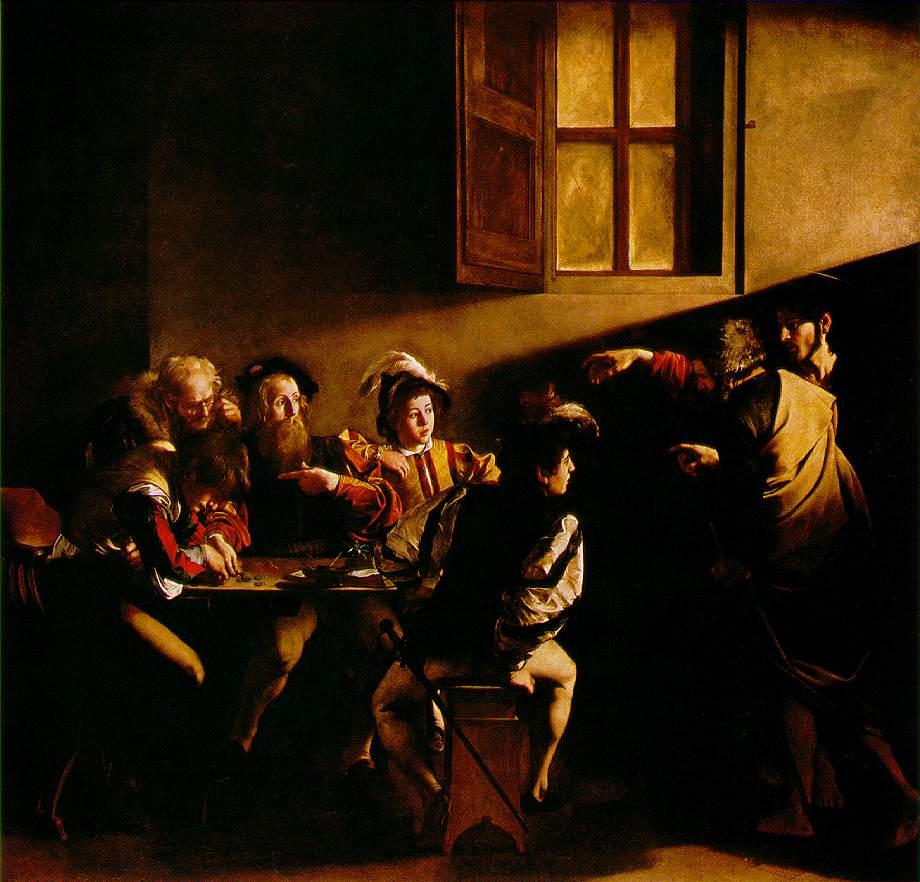
Being Catholic means being human; we covered that a little while ago. However, such a claim warrants more than a simple response. Thus, again we delve into this perplexing yet straightforward reality…
So after a break from writing (kudos to Andrew R. for having covered so well in my absence) and some major church-gazing here in Assisi, I decided to make the next installment of this thread have to do with art. Maybe it’s a quick, presumptuous leap from last week’s theological topic, but I think you are all intelligent people. You’ll quickly fill in the gaps. Plus, this should help to supplement my buddy’s last post about meditation.
The history of the Church is laden with countless examples of artistic development: for example, the rendition of the Eucharist in the catacombs discussed before, or the art (in all its various forms) that finds its home in our local parish churches. Whatever the case, the intent of truly “Catholic” art must always be to draw attention to the hidden mystery of the Holy Trinity – even if the focal point be the Blessed Mother, the saints or some other holy thing. (N.B. I have excluded amorphous blobs and superlatively incomprehensible clutter because it really possesses no artistic value in a profoundly Catholic sense, even though we often find these “works of art” in some of our churches.) Not only does the history of the Church entail the utilization of art, however, but it is also host to the actual foundation of many schools of classic art. The long and short of it is that, by embracing Our Lord, Her Divine Spouse, the Catholic Church has always embraced artistically beautiful representations of Him and His creation.
It’s not possible to love a God who took human form without truly loving human nature and its various facets of creativity. That’s why art is such a key player in the history of Christianity, and in our understanding of the deepest mysteries of theology. Like Andrew R. wrote, meditation is about our finding God in His created world. So true. To understand the mystery of Christ’s Incarnation, we have to seek Him in the mysterious Love of the Holy Spirit – in the hidden Truth of the Eucharist – but also in the gifts He’s given us to glorify His Name. Going back to the point of the last article on this matter, being Catholic means being human in many ways, one of the most noticeable being an appreciation for artistic works and songs, which draw our minds toward the Life of the Holy Trinity. Think about that next time you go into a church; even if there aren’t gorgeous works of art plastered all over the walls, try to find something that strikes you as notable and spend a few minutes meditating on it. Why does it strike you as beautiful? What does it tell you about Jesus Christ? How does it help you glorify the Trinity at that very moment?
Meditation: Seeking God With Reason
Posted by Andrew Reinhart in Prayer on 7.26.2007

Today I am going to provide my reflection on how Fr. Dubay talks about St. Teresa of Avila's views on meditation in his book Fire Within. One note, I do not intend to provide a complete or systematic handling of meditation with this post(this would be impossible and I am not capable of it), so please add any comments about meditation you think will be helpful. Also, as you read please feel free to ask questions in your comments. I might not be able to answer them, but I may be able to at least point you in the right direction.
First, I think it will be helpful if I clarify some of the things meditation is not. Unfortunately, I think when someone in our modern culture hears the word meditation they do not think of their parish priest, a monk, or the old lady who is always twenty minutes early for the earliest Mass in the city. What pops into our minds is some Buddhist monk or Kung-Fu master sitting on the ground somewhere humming. I am still guilty of this. The point of meditation in not to create a state of awareness, or to simply empty the mind by using some complicated technique. I think this misconception is the reason so many of us think we are not capable of meditation. We make it something that it is not.
The most simple definition on meditation I can give is this: trying to find God in something He has created or done. When we are meditating we need to look for the infinite in the finite. This can be done with anything you can think of. Find the creator in the created. An example of this is to see the beauty and vastness of the sky, and then realize that God is infinitely greater(not in a physical sense) and infinitely more beautiful than the sky. This same thing can be done with the truths of the faith and scripture. For example, the Incarnation is a bottomless well for meditation. Christ has both a human and Divine nature! God loves us so much that he was willing to become a child that could not even speak, feed itself, or control its own bowls! This can teach us what love is, and this can teach us about real humility.
This brings us to the purpose of our meditation. In meditation we should always try to remain open to some inspiration from God, but we also must actively use the mind that God gave us to try to understand what God has done here on earth. This will slowly transform us, especially because, at least in my own experience, when we see God's goodness more fully in our world, it helps us to try to do the same. In this exercise do not expect that you will receive some new undiscovered truth. What will happen is that the truths you already know about the world will come alive and take new meaning for you; the distance between your mind and your heart will slowly be overcome.
I do not think the way to get better at meditation is to learn new techniques. Although we should know some techniques to meditate, this is only the first step (I will discuss how to advance in our prayer life next week). I do not suggest looking farther than your own Catholic tradition to find the techniques we need. Although there may be some truth in the traditions of the far east and elsewhere, they do not possess the fullness of truth. What we have in the Church has made saints! They are proven methods. A good place to go for a tried and true technique for meditation is The Introduction to the Devout Life by St. Francis de Sales. The first two sections give a good method for prayer. It is good to read both sections completely through once, then go back and read them slowly, chapter by chapter, as you are trying to start using the method.
More to come on contemplation and prayer growth, soon.
Apologies
My apologies to those who have been checking this blog regularly: I have not been as available for posts as I'd like to be. Language school has been quite the burden and has left me little liesure time to check up on internet-related things. However, fear not, for an upcoming post is in the making. I hope to continue with the train of discussion about Catholicism vs. human nature. It's fascinating stuff.
Please keep reading, and commenting. The more the merrier. We appreciate your help in making this a really educational and interesting site. Thanks!
Speaking to God
Posted by Andrew Reinhart in Prayer on 7.24.2007

To round off my reflections on Fr. Dubay's Fire Within, I am going to provide some short reflections on the different ways we can pray and on the conditions for growth in prayer.
Today I am going to write about vocal prayer. I think most people understand vocal prayer the best, because amongst the types of prayer, it is the most similar to the way we normally communicate with other people. It is not uncommon to fall into the trap of believing that vocal prayer is the only type of prayer. Prayer is always communication with God, but in prayer the communication is accomplished primarily through communion. This means that we do more by bringing our heart to God than by saying anything. This is like in the Old Testament, especially in the pre-history in Genesis, whenever the marital embrace occurs (people having sex), it says "he knew his wife." We learn much more about a person by spending time with him than by reading about him, and this knowledge gained through communion is accomplished in a very special way in the marital embrace. Although, it is important to express your desires before God and to pour out your heart to Him every day, prayer is not primarily about what we can get God to do, but it is about how much we can allow God to do to us. God already knows more about you than you are even capable of telling Him. This does not mean that vocal prayer is not important, but it does mean that along with vocal prayer we should also seek God through reasoning and in the silence our hearts (by meditation and contemplation which will be the subjects of my next two posts).
We find very good direction on all vocal prayer in the quote that Fr. Dubay gives from St. Teresa of Avila on vocal prayer. "If a person does not think Whom he is addressing, and what he is asking for, and who it is that is asking and of Whom he is asking it, I do not consider that he is praying at all even though he be constantly moving his lips" (cf. Fire Within p.76). Whether or not we are saying anything does not determine whether or not we are making a vocal prayer. The desire that we express through our words is the prayer, and the vocalization (mental or physical) is the means by which we reach out to God to accomplish this desire.
I also think it is very important to bring ourselves as we are to God. We must bring ourselves before our king as the poor spiritual peasant we are, before Christ our brother as His dear friend, or before our Savior as someone who realizes that they have no way to repay the gift they have been given (and in any other way we can properly express our relationship with God). This does not mean we must create prayers that we think will express theological truths most beautifully, but it does mean that we must try to see God for who He is, see ourselves for what we are in this divine light, then express with our words what this reflection creates in our heart.
As a closing note I want to mention the prayers that have been handed down to us, especially the Our Father, and also other written prayers. These cannot be seen as meaningless with this new perspective on vocal prayer, because they express the deepest desires in our hearts, even though we do not always perceive this as a result of our fall from grace. Saying these prayers that express our deepest longings (we can be sure of this because of their scriptural origin or by the personal sanctity of the person who wrote them) can help us bring our own unruly desires into order. It is also noteworthy that a desire is not simply a feeling, but it is a disposition (a leaning) that is created by seeking something. For example, an NFL player creates the desire to win the Super Bowl by ordering his entire life to winning the Super Bowl. In the same way we, as Christians, by habitually expressing these written prayers and by ordering everything in our life toward God, dispose ourselves more to God. This helps all of our prayer become more sincere because it will thus express more clearly what we all really desire: God Himself.
Humanae Vitae: Final Article
Posted by Andrew Haines in Church Doctrine, Theology on 7.23.2007
This is the final entry in my 3-part series of articles on Humane Vitae for the Sunday bulletin at St. Thomas More Parish:
________________
This article marks the third and final chapter of my commentary on Pope Paul VI’s encyclical letter, Humanae Vitae. So far, we have examined the intent of the Holy Father in writing this letter to the universal Church, as well as some of the underlying theological truths that he clarifies so beautifully. This week, our focus will be upon the final (and perhaps most important) aspect of interpreting Humanae Vitae: its practical application in our daily lives. So, without further ado, let’s take a look.
Throughout the course of his encyclical, the pope takes ample time to discuss one modern practicality at great length: that of artificial methods of contraception and their incongruity with the message of the Gospel. For years (centuries even), artificial birth control has been a means of limiting procreation, within and outside the marital context. In recent times, however, this epidemic of contraception has been increasingly publicized by our culture, and even our governmental institutions – everything from sex-education to foreign aide seems to proliferate the “goods” of contraceptive products. Perhaps most appalling is the reality that many Catholic clergy have even gone so far as to promote this attitude of narcissism from the pulpit. As faithful Catholic men and women, this is a mentality that should shock us. As messengers of the Gospel of Life, we can have no tolerance for such atrocities as contraception, abortion, euthanasia and sterilization, which render void the natural – and beautiful – capacities of the human person. Contrarily, we must love one another so much that our love, in its proper marital context, gives way to the procreation of new life. Perhaps the Holy Father sums up this idea best in the following words: “[Responsible parenthood] concerns the objective moral order which was established by God, and of which a right conscience is the true interpreter. In a word, the exercise of responsible parenthood requires that husband and wife, keeping a right order of priorities, recognize their own duties toward God, themselves, their families and human society.” (HV 10)
The responsibility of protecting the transmission of human life does not fall only to the married faithful, however. All Catholics, whether single, religious or priests, are called to spread the message of life illuminated by Humanae Vitae. Pope Paul VI expressly petitions each of these groups, at the end of his letter, to help the world come to know the sacredness of the human person. This means that, even though our current vocation may not be to physically procreate, we are nevertheless obliged to teach and live the Truth of Jesus Christ. In part, this means offering compassion to those who suffer from having used contraceptive or abortive methods, while at the same time helping to carry them to a richer understanding of the Church’s teaching. “The Church, in fact, cannot act differently toward men than did the Redeemer. She knows their weaknesses, she has compassion on the multitude, she welcomes sinners. But at the same time she cannot do otherwise than teach the law. For it is in fact the law of human life restored to its native truth and guided by the Spirit of God.” (HV 19)
As we continue to allow Christ to shape our hearts after His, let us always remember the profound words of the Holy Father at the conclusion of Humanae Vitae: “Venerable brothers, beloved sons, all men of good will, great indeed is the work of education, of progress and of charity to which We now summon all of you. And this We do relying on the unshakable teaching of the Church, which teaching Peter's successor together with his brothers in the Catholic episcopate faithfully guards and interprets. And We are convinced that this truly great work will bring blessings both on the world and on the Church. For man cannot attain that true happiness for which he yearns with all the strength of his spirit, unless he keeps the laws which the Most High God has engraved in his very nature. These laws must be wisely and lovingly observed. On this great work, on all of you and especially on married couples, We implore from the God of all holiness and pity an abundance of heavenly grace as a pledge of which We gladly bestow Our apostolic blessing. – Paul VI” (HV 31)
No Greater Love
Posted by Andrew Reinhart in Prayer on 7.22.2007
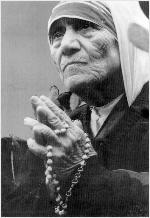
Today I want to present you with a new book. Not because I am done sharing my reflections from Fire Within, but because I plan to give my copy of this book away on Monday. This is also my second copy, so I probably will not buy another any time soon. Before I present this book, I want to paraphrase for you some of Fr. Dubay's favorite ideas from Fire Within, because I think they are a nice addition to my last post on distractions.
First, we should always remember that our relationship with God is a relationship of love. The reason why so many saints are misunderstood during their lives is that they are head-over-heals madly in love with God. This is not because they have some kind of physical experience of the divine that is similar to the marital embrace, but it is because at the heights of holiness God and the soul are habitually and essentially in a state of communion. This does not mean that feelings experienced during prayer are bad, but these feelings must be understood for what they are. They are the overflow of the communion experienced in the soul, and as prayer advances these feelings actually become more intense than any other feelings on earth. Also, while your prayer is dry and painful, always remember that God's plan in the world is Resurrection through Crucifixion. This is the plan that God carried out in the life of his Son incarnate, and this is the plan that God has for us, His spiritual children. Remember, the Resurrection is always right around the corner!
The book I want to provide a quick review of is No Greater Love. This book is a collection of wittings and sayings of Bl. Mother Teresa. Mother Teresa did not write any complete works for publication, and many books similar to this one have been published in recent years. I recommend this work in particular because the selections in it are all large portions of text which contain complete trains of thought. Anyone can read this book, but I do recommend that it is read carefully. Now, I want to simply share a few quotes from this book that will follow from other themes that I have spoken about recently. The power in this saintly women's words shines through, and a I think a reflection by me would simply reduce this light.
"We want so much to pray properly and then we fail. We get discouraged and give up. If you want to pray better, you must pray more. God allows the failure be He does not want the discouragement. He wants us to be more childlike, more humble, more grateful in prayer, to remember that we all belong to the mystical body of Christ, which is praying always.
We need to help each other in our prayers. let us free our minds. Let's not pray long, drawn-out prayers, but let's pray short ones full of love"(No Greater Love p.4).
"When Jesus came into the world, He loved it so much that He gave His life for it. He wanted to satisfy our hunger for God. And what did he do? He made Himself the Bread of Life. He became small, fragile, and defenseless for us. Bits of bread can be so small that even a baby can chew it, even a dying person can eat it. He became the Bread of Life to satisfy our hunger for God, our hunger for love"(p.82-83).
"Suffering will never be completely absent from our lives. So don't be afraid of suffering. Your suffering is a great means of love, if you make use of it, especially if you offer it for peace in the world. Suffering in and of itself is useless, but suffering that is shared with the passion of Christ is a wonderful gift and a sign of love. Christ's sufferings proved to be a gift, the greatest gift of love, because through His suffering our sins were atoned for"(p.136-137).
More on prayer from Fr. Dubay next time.
Being Catholic Means Being Human
Posted by Andrew Haines in Philosophy, Theology on 7.21.2007

One thing that makes human beings totally different than other creatures is their ability to reason. Because of this, Aristotle, perhaps the greatest Greek philosopher, defined man as a “rational animal.” Contrary to what it seems, this designation isn’t meant to degrade the value of human life, but rather enhance it – human nature is endowed with the ability to reason toward the truth along with the capacity for sensation, as are other animals. Really, being a rational animal is a compound of two separately good things; together, they compliment each other nicely and allow humans to seek truth through both intellectual and sensual means.
Where am I going with this?
When I was writing yesterday’s post, it made me think that, along with believing Catholicism is some sort of magically formulated religion, it seems people often think one of two extremes about the faith: either all things physical are totally unequipped to help us see the Truth (Jesus Christ), or physicality is the only thing which can bring us to this Truth. Although both ends of this spectrum are commonly adopted by individual believers, both positions are absolutely false. Follow along, if you will…
First off, let’s set one obvious fact of our faith straight: “God so loved the world that He gave His only Son” – in human form – so that we might come to love Him more and more. The Incarnation of Jesus Christ is the first proof that our humanity is beautiful in its totality. If it weren’t, would God Himself have chosen to adopt it? Of course not! The mixture of sensitive and spiritual parts is exactly what makes man so lovable; we live in a world where we not only experience the foretaste of God’s beauty in created things, but also freely choose to accept His Love as a result. In short, Jesus was only able to become man because man’s nature is inherently good.
Second main point: even though man is inherently good in his nature, the Fall from grace experienced as a result of Original Sin caused something known as (quite appropriately) “fallen human nature.” Jesus was able to become man because man was created good, but he chose to become man because man had freely fallen from his original goodness and was in need of Salvation. You may wish to read that last sentence again…actually, I’ll just write it again. Jesus was able to become man because man was created good, but he chose to become man because man had freely fallen from his original goodness and was in need of Salvation. This basic truth is the underpinning reality of our entire faith as Catholic Christians.
Third point: Jesus utilized the fullness of His human nature in saving mankind. Obviously, Christ didn’t just come and preach the Gospel and then vanish. He didn’t descend as a pure spirit upon a few lucky guys during the reign of Caesar Augustus and say, “Just be good, OK?” No. Jesus came in the flesh, and He saved us through the free offering of His flesh. By physically dying on the cross and being physically raised to life at the Resurrection, the fullness of human nature was redeemed from its fallen state, and was again imbued with sanctifying grace – the stuff that allows us to get to heaven. By using what was imperfect, Jesus redeemed the order of creation and permitted mere mortals to follow Him into the celestial Paradise.
All of this is pretty fundamental; every Catholic should be aware (to some degree) of the things mentioned above. But, as Christians seeking to know more about our faith and our God (which I’m sure you all are, since you are so kindly reading this post), we need to take the next step in understanding, “Why is the fullness of my humanity important in coming to know the Lord through the Catholic faith?” Quite the question, and hopefully next time I can provide a decent beginning to what will be an exciting response. Stay tuned…
Catholicism: Derived from Paganism?
Posted by Andrew Haines in Philosophy, Theology on 7.20.2007

Today I had the chance to visit the Catacombs of Priscilla in the city of Rome, where, for over 1,700 years, the Catholic faith has been preserved both in the actual bones of the early martyrs and the pious devotions of the faithful. After walking through the labyrinth of underground corridors, which amount to 8 miles total, the group of seminarians I was with (along with a priest of our college) was able to celebrate Mass directly above the tombs of two famous martyrs: Sts. Felix and Philip. This opportunity gave me the idea to write a little about the faith of the early Christians, and to explore the continuity of the faith from those first days until now. One thing that really struck me about the catacombs were the various expressions of religious art, and the depictions of God the Father, Jesus, Mary and the Eucharist. For this first post, I'll write a bit about the fresco painting you see above, which is located at the Catacombs of Priscilla.
It seems like a lot of people today have really lost touch with the fact that the Christian faith didn't just pop out of nothingness -- there was no magical book of practicalities and rules that descended to earth when Jesus ascended into heaven. Sure, the foremost of Christian books is the Bible, but this is the fruit of many years of intense labor and much Tradition. Even the Gospels we currently recognize as part of the biblical canon -- Matthew, Mark, Luke and John -- were not always known as such. Undoubtably, there was a time in the early days of the Church when the faithful had no real guidance regarding theology other than the teaching which had been passed down from the Apostles, and the example and witness of the holy martyrs, who gave their very lives for that faith.
During this period, while the tenets of the Catholic faith were still being established, the influence of secular (pagan) culture played a major role in the formation of ideas, for better and for worse. The picture above is an example of this influence. In this fresco (a type of painting applied "fresh" to the plaster underneath), one can see seven people seated at a table. The man on the far left is depicted as a presbyter, or priest, who has the responsiblity of breaking and distributing the bread to the other guests. Also on the table with the bread are wine and fish. Certainly, it is easy for a Catholic to see the Eucharistic reference here: the priest consecrates the bread and wine to become the Body and Blood of Christ, and distributes them to the faithful at Mass; the image seems to come directly from the Last Supper, and is likewise depicted. However, we need to remember that the popular artistic conception of the Last Supper was not formulated until the Renaissance period, and this fresco dates back to around the year 200 AD.
Real significance lies in the fact that, upon the anniversary of one's death, family members of deceased pagan men and women would attend to the grave of the dead and hold a dinner in their honor. This typically consisted of telling stories about the dead person's life, and even sharing some portion of the food and wine (libations) with the deceased through special holes in the ground. It is no coincidence that the format of this pagan festival was utilized in this depiction of the Christian liturgy -- the liturgy arose from among the ranks of the people; even the word "liturgy," in Greek, means "the work of the people." While the Christians did not intend the same meaning as the pagans, they saw the symbolism as an opportune way to manifest the beliefs they held about their faith in Jesus Christ. Through the celebration of the Eucharist, Christians remembered the saving power of the Resurrection, and it was thus an image commonly placed over the tombs of the beloved deceased members of their community.
Distractions
Posted by Andrew Reinhart in Prayer on 7.18.2007
Thank you for the feedback on the posts. It is very motivating for me to know that people are reading, and they are getting something out of what they find here. A note for anyone whose first post is this one. I am currently posting my reflections on a book by Fr. Thomas Dubay S.M. called Fire Within. This means that I am writing my own words, but the insights that have informed my ideas are coming from Fr. Dubay's book.
The topic of the day is distractions in prayer, and in order to provide a more complete look at this topic I will include many insights I have gained through personal direction that I have received and other books that I have read in the past. Distractions are a universal experience in the spiritual life, and for the most part we assume that the distractions that we experience are bad. We hate them, and we wish that our mind and imagination would just listen to our will. It is the insight of St. Teresa of Avila, that we must not be distressed over the distractions that we experience, and we should expect them. First, I am going to provide a three step reflection to shed light on why we experience distractions, and then I will provide what practical advise Fr. Dubay draws from St. Teresa on how to handle distractions.
Why are we distracted during prayer?
Reflection #1: Are we trying? Although this is probably the least common cause for why we are distracted, we must ask ourselves this question first. Do not answer this question by looking at how the prayer time feels, but simply call to mind what you want. If you want to be praying, then you are praying. We also need to make an effort to reign in our wandering mind, but this is often impossible. What is important is that we want to pray and are trying to pray. God sees the intention of the heart.
Reflection #2: "Where your treasure is, there your heart will be also"(Matt 6). Where our mind takes us while we are trying to pray is where it goes during the rest of our day. In fact, if you are attentive, the distractions you experience can be a helpful tool to discover what might need to be changed, purified, or redirected in your life. Bring yourself to the Lord where you are. The place where your mind runs is probably one thing you should pray about. This is not necessarily a sin, it could be, but it could be something that needs to be redirected in your life for the glory of God. We need to seek God with an undivided heart.
Reflection #3 We profit from distractions! (Fire Within p.225) When we are distracted in prayer we are forced to seek God in dark faith. When we experience feelings in prayer or are able to easily create meditations, we approach God through these means. They certainly do make our prayer feel more sincere, but this does not mean that the prayer is better. When we approach God through dark faith, we are actually doing something much more profound, and this prayer itself is a suffering. This unpleasant period of prayer is actually extremely purifying, and through this time spent suffering with our Lord we concretely grow in virtue. Usually there is no noticeable change in us from day to day, but over a period of time God uses this empty feeling prayer to make us more like Himself.
How should we react to distractions?
Tip #1: "No on be distressed or afflicted over dryness or noisy and distracting thoughts"(Ibid.). Distractions are normal, and they should be expected. They are an opportunity and not a curse. Use them to purify yourself, and be assured that God is also purifying you through them.
Tip#2: When the mind wanders off after the most ridiculous things in the world, she should laugh at it as the silly thing it is, and remain in her state of quiet" (p.226). Be light and gentle with yourself. If you try to beat yourself into submission, then your mind will probably become more unruly. Do not give the distractions the time that they do not deserve.
Tip #3 Continue on as you have planned. It does not help to fill the emptiness with extra words. Humbly and simply continue to seek God in the emptiness, but do not give up any exercises you are accustomed to. Continue to say the normal vocal prayers and devotions that you have said in the past.
Tip #4 Focus on God's indwelling presence. If you are in a state of grace, then God is the king of your heart. Although it is extremely hard to see God in ourselves through all of our imperfections, by doing this simple meditation we can (occasionally) focus our minds. This meditation can also help us develop a healthy view of ourselves.
I hope this helps. More to come soon on the types of prayer and conditions for growth in prayer.
Humanae Vitae: Second Article
Posted by Andrew Haines in Church Doctrine, Theology on 7.17.2007

The following is the second installment of the 3 part series on Humae Vitae I wrote for Fr. Michael Dandurand at St. Thomas More Parish in Bowling Green, Ohio.
_________________
Last week, I tried to provide a brief overview of a monumental and providential document, issued by Pope Paul VI in 1968: Humanae Vitae (“Of Human Life”). Based on the title of this encyclical letter alone, however, it is obvious that a single commentary article could never be sufficient in providing even a basic understanding of its worth. Thus, I again hope to use this forum to explain the immense value of the Holy Father’s teaching concerning marital love and procreation, and to bring to light a little more the inestimable wealth of divine Love which it imparts to the universal Church.
“The question of human procreation, like every other question which touches human life,” writes the Pontiff, “involves more than the limited aspects specific to such disciplines as biology, psychology, demography or sociology. It is the whole man and the whole mission to which he is called that must be considered: both its natural, earthly aspects and its supernatural, eternal aspects.” (HV 7) As Catholics, we should all be able to find great truth and comfort in this statement; it is not our utility to society that makes us special in God’s eyes, but rather our very essence, having been created in His image and likeness. The human person is an organic whole, to be seen by others as inviolable, and it is in light of this reality that the Holy Father seeks to clarify what the Catholic Church has always taught about the significance of human life, specifically with regard to procreation and its most fundamental and modern opposition: artificial birth control and contraception.
To begin, the pope calls to mind the “inseparable connection, established by God, which man on his own initiative may not break, between the unitive significance and the procreative significance which are both inherent to the marriage act.” (HV 12) In other words, we are to be conscious of the fact that the beauty of marital love is found both in the union of spouses to one another (a participation in the Trinitarian union) and in the openness of both spouses to the procreation of children (a participation in the creative Love of the Holy Trinity). The first claim is rather readily accepted: “Men rightly observe that a conjugal act imposed on one's partner without regard to his or her condition or personal and reasonable wishes in the matter, is no true act of love.” (HV 13) The latter claim, however – that of the sacredness of procreation – is much more commonly denounced and promptly cast aside. Together with contraception, the Holy Father cites intentional sterilization, abortion and anything which interrupts the “generative process already begun” as a serious violation of the true meaning of conjugal love. In short, any process that is intended to limit the total gift of self from one spouse to another during the marital act is an impediment to true love and is thus an abomination of the sacramental worth bestowed upon marriage in the sight of God.
Certainly, it is not the intent here (nor was it that of Paul VI) to convey a message of “thou shalt not.” The aim of the Catholic Church has always been, quite simply, to promote a positive view of the human person in light of salvation history – Jesus Christ’s Passion, death and Resurrection, which saves us all from sin. However, an unfair reading of Humanae Vitae, or any Church teaching for that matter, can lead the uninformed man or woman to believe something quite contrary from its true and intended message. For this reason, it is important to spend a little time on the practical directives also provided by Pope Paul VI at the conclusion of this encyclical. In the final installment of this column, we will examine more closely the expectations that the Church has for us, as lay men and women, concerning the transmission of human life and the preservation of its dignity, both during and after conception. Until then, may we continue to pray that the Lord Jesus enlighten our minds and hearts to the reality of His glorious Love, and that we all come to find the majestic beauty of the Catholic Tradition, given to us through the Holy Apostles. Praised be Jesus Christ, now and forever, Amen.
Hodgepodge
Without too much monkey-wrench-throwing into the finely tuned cogs of this blogging machine (<< insert sarcasm here), I wanted to take a little time to write about some less academic, more daily life type things. I've gotten a few questions -- from priests, seminarians and friends alike -- concerning how much personal, seminary related news I'd put up on the site. So, what are your thoughts? I've noticed that Andrew has gotten a lot of good comments too. Would you all appreciate more of that kind of thing, or is the balance we have right now (and are working to build) pretty good? I hope to get more contributors, especially from among the ranks of Toledo seminarians and other NAC men. I think having a few perspectives is a good and edifying thing. Leave comments now and all along giving your thoughts and suggestions for this page. Like Andrew wrote, it is really supposed to be for your enjoyment and scholarship. Posting is only profitable when readers gain from it.
On a closing note, I realize my posts have not been very educational as of late. Due to international transit, it's been hard to keep abreast with these sorts of things. Hopefully -- and living in Rome -- I'll be able to continue with these posts much more regularly than recently. For the time being, Fr. Adam Hertzfeld has a great blog on lots of Catholic doctrinal questions, which you can access through my "links" section. Please keep reading and pray for us as we gear up for a new year of seminary formation. Thanks!
The Experience of God
Posted by Andrew Reinhart in Prayer on 7.16.2007

In my last post I made mention of spiritual direction, and one generous commentator provided us with another book recommendation. It is another book written by Fr. Dubay on the subject of selecting a spiritual director. Seeking Spiritual Direction: How to Grow the Divine Life Within is the title. I have never heard someone say they were disappointed after reading one of Fr. Dubay´s books, but they are all written with academic language that can be hard to read if you are not used to it. Thanks for the comment Michael!
Now I will pick up the ball where I dropped it at the end my first post. Once we initially give ourselves to God it is not uncommon to have a very strong emotional experience, and then a pleasant period of general clear sailing during our prayer after it. I would say this period is characterized by very pleasant prayer experiences and an overall drop in anxiety during the normal daily routine. This period always ends though, and the time that follows it can be characterized by very empty feeling prayer and some kind of trial. I think this trial is most commonly some old sin that seemed to disappear while everything seemed easier and now has resurfaced right at the wrong time. There are two completely reasonable and normal human reactions to this experience. The first is to discount the reality of the conversion, and the other extreme is to acknowledge the conversion but think that God has abandoned you.
Neither of these extremes are the correct way to respond to this situation, but they are normal and understandable reactions to what has just happened. Before I can provide an alternative to these reasonable responses I will allow Fr. Dubay to shed some light on the situation.
Before we can fully understand the reason behind how we experience God, we need to try to understand what human experience is in its most general sense. On this Fr. Dubay states: "experience is an awareness caused by an objective other, and in this contact affectivity predominates ... experiences change us for the better or for the worse"(Fire Within p.40). This is a fancy way of saying that whenever we experience anything, what is happening is something that is not us is coming into contact with our senses in some way(a sent touches our nose, light to the eye, a sound to the ear, etc.), and then the only reason we know that this contact is made is because we feel it.
There is a difference in the way we experience God though, because God is spiritual(not something that can be sensed), and when we come into communion with God, He encounters us in our sprit, our soul. This is why the two extreme reactions mentioned above are so normal. When we experience God it is unlike anything that we experience in other parts of our lives. Now the question is, "how do we know that we are really praying then if we cannot feel anything." The best answer I can give for this question is that, while you are trying to pray, if you want to pray, then you can be sure that you are praying. God always sees the intention in our heart regardless of what words we say (or fail to say). Feelings are often experienced during prayer because of the connection between our body and soul. A human being is an embodied spirit, and the only thing that can tear these two things apart is the greatest physical evil experienced because of the Fall, death. Even after we die God will return us to our natural embodied state with the Resurrection we profess during the Creed every week.
Remember the end of Fr. Dubay's definition of experience, that each thing that comes in contact with us changes us. You can be certain that the experience of God will always change us for the better, and this is the best means of seeing improvement in the spiritual life. It is normal to continue to experience ups and downs during prayer, and this is why our prayer itself is not good at telling us where we are in the spiritual life. One day while you pray you will feel like a saint and the next you may feel like a newborn unable to simply sit up. It is also the case that during the peaks and the troughs of prayer many normal temptations will disappear and resurface, although the grace is always available to resist. Thus, to see the improvement in your spiritual life, which God is blessing you with, it is best to look back over the last four to six months and compare them to the four to six months that came before them(I know, this is very hard in the fast paced society in which we live). If you are living a generous life (simply trying to give yourself to God more every day) then I am sure you will see God's grace at work in you in a concrete way.
In my next post I will make a few more points on this topic, and I will also try to explain the reasons why we experience distractions in prayer. Please feel free to provide feedback in comments. I am in the midst of studying philosophy so if my writing is extremely boring or I am hard to understand please tell me. If I am boring you, and forcing you to read long posts while you are waiting for Andy to post something worth while, then yell at me. This blog is for you, and I do not mind dropping this subject to pick up something that will interest you. Thanks and God Bless!
Finalmente...

Finally! After almost 35 hours with no sleep, I am set up and functioning (at least physically) in Rome, Italy. For sanity's sake, I'll keep this short. But, I just wanted to initiate the blog properly, since its theme strongly suggests my being in Rome as its author. Please pray for me as I shake off the jetlag and begin to acclimate to the culture and pace of non-American life. This week I will spend doing logistical paperwork in the city, and will ship out for Assisi and Italian language school this coming weekend. Know of my prayers for you all and please keep reading. I promise, more good (or at least lengthy) posts in the near future. Good night!
P.S. -- On the plus side of all this travel, at least I arrived to a nice view of the newly renovated central courtyard from my room window. (See photo. More to come).
Some General Notes
 Before I continue to give my reflections on The Fire Within: St. Teresa of Avila, St. John of the Cross, and the Gospel-On Prayer. I must acknowledge a tip that was provided in a comment. Apparently Fr. Dubay has written another book on this same subject that is more accessible to the casual reader. The title is Prayer Primer : Igniting a Fire Within. Thanks for the tip Ted!
If you are interested in doing some spiritual reading, but do not want to spend a lot of money on books (libraries usually do not have many spiritual books), then you might want to check out http://www.ccel.org/. It is a free online resource provided by Calvin College. It only has the classics though (because they were written before Copyrights), and many of the books are from famous protestant authors. Many Catholic classics are available on the site too: the major works of St. John of the Cross and Teresa of Avila, some letters of the Little Flower, The Imitation of Christ, and The Introduction to the Devout Life, to name a few. If you are interested in doing spiritual reading, do not get the impression from my last post that it is a very dangerous thing. I just think that, in general, it is easy to misunderstand other people when they talk about the spiritual life, because the spiritual realities that are being described do not fit into the normal categories that we use to describe physical things (size, shape, taste, etc.).
If you are looking to really take your spiritual life seriously, and you want to avoid most of the pitfalls, then the best thing to do is to find yourself a Spiritual Director. A Spiritual Director is someone who becomes the guide of your soul; a person who can see what is happening in your spiritual life and tell you what to do. Generally speaking, a spiritual director is a priest, but it is not unheard of for extremely holy religious to become spiritual directors in special cases (St. Teresa was her brother's spiritual director). Now the question is "which of the many priests or possibly religious I know will make a good spiritual director for me?" The best advise I can give here is the very advice that Jesus gave us all: "You will be able to tell them by their fruits"(Matt 7). If it seems that this particular person is making saints out of people in the other areas of their ministry, then there is a good chance that they will make a saint out of you too.
To end I will leave you with my favorite quote from my favorite spiritual work, The Imitation of Christ.
"Indeed, by loving myself badly I lost myself; by seeking only You and by truly loving You I have found both myself and You, and by that love I have reduced myself more profoundly to nothing." (Book III, ch.8)
The Divine Fire is Calling Each of Us From Our Hearts
Hello Everyone,
Since Andy has introduced me I will spare your eyes another introduction. Normally I am going to be posting reviews of spiritual books, and then after the initial review post I will provide my personal reflections of subjects covered in the books. I want to do this because I think that spiritual reading is a very important part of any spiritual life, but I also think many of the best modern spiritual works are very difficult to read and written with extremely thick academic language. In my opinion the other group of the best spiritual works are the classics, but most of these are written with old language that is very hard to understand. A misunderstood spiritual book can be dangerous because it can lead very faithful people in the wrong direction in the spiritual life. It also seems that many people just do not have the time to read a lot about the spiritual life. I am far from an expert in this field, but I have received some good advise about this subject in my life. I also enjoy reading books about the spiritual life, and I do it for recreation. I hope to provide helpful pieces of advice from these books I read, but as I said, I am no expert, so do not be afraid to be critical with your comments.
The first book I want to look at is The Fire Within by Fr. Thomas Dubay, S.M.. This book, published by Ignatius Press, is a summary of the spirituality of Sts. John of the Cross and Teresa of Avila. Other than providing a very beautiful summary of these saints' view on the spiritual life, Fr. Dubay argues that the teaching of these two Carmelite saints is no more and no less than the radical spiritual life that Jesus calls each of us to in the Gospel. This book is written as a beginners level theology book, and while the author does not assume any previous knowledge, the vocabulary in the book is difficult to understand if the reader does not have any academic training. This book is just a little over three-hundred pages, and I would recommend it to anyone who wants to grow radically closer to God and wants to understand the spiritual teachings of these saints.
One of the strongest points made in The Fire Within is that every single Christian is called to a deep and life changing experience of God. The author thinks that people in modern time often falsely think that there are two options in the spiritual life. One more intense and entire life lived for God that is for the saints, and another which is for the rest of us. This view is not the Gospel. The road to God is a two lane road, but it is not a one-way street. Jesus says that "you are to be perfect, as your heavenly Father is perfect." (Matt 5) Each person needs to try to give God everything, or else there is no hope of reaching the perfection to which Christ has called us. I think one of the reasons that w Christians do not do this is that we doubt that God will really fill the space that we leave empty. However, our Carmelite saints write otherwise. They say that as soon as the space is made for God, He fills it, and He fills it overabundantly, even though at times we do not experience God the way we think we should. This will be the subject of my next post.
Comments, Updates, etc.
Based on the number of site hits I've tracked, there must be some people who are reading the posts here. If you are one (and it seems that you are), please don't be afraid to post a comment. In case you are new to the blog scene, that is possible by just clicking the comments link, below, and typing something. This will be a good way to begin more interactive dialogue and promote topics of general popularity.
Also, Andrew Reinhart -- my brother seminarian studying at the Pontifical College Josephinum in Columbus, Ohio -- has recently agreed to contribute to the blog. Look for some upcoming book reviews and the like from his end.
Thanks for reading. More soon...
"Credo in unam...Ecclesiam"
Posted by Andrew Haines in Church Doctrine, Theology on 7.12.2007
 Well, quite fittingly, after the past few discussions of the Catholic Creed another related topic has been brought to my attention. A few days ago, the Congregation for the Doctrine of the Faith (i.e. the Vatican office formerly headed by the current Pope Benedict XVI, which takes upon itself the defense and explanation of Catholic doctrinal proclamations) issued a letter of instruction on the use of the word 'Church.' Unfortunately, like most Vatican statements this one has also been terribly misinterpreted by the popular media, who propose that the Catholic Church intends to discontinue its prayer for Christian unity. Associated Press writer Nicole Winfield's article, "Pope: Other Christians Not True Churches," does nothing to foster a genuine understanding of the Vatican's statement: "The statement brought swift criticism from Protestant leaders," she writes at the beginning of her story. "'It makes us question whether we are indeed praying together for Christian unity,' said the World Alliance of Reformed Churches." Only later -- paragraphs later -- does she go on to explain more objectively the meaning of the document. But, alas, this blog post is not a commentary on journalistic bias. Let's focus on the reality of the Holy Father's teaching.
The document, entitled "Responses to Some Questions Regarding Certain Aspects of the Doctrine on the Church" (talk about a catchy title, eh?), is structured in a Q&A style. The overarching theme is the claim that "the Church of Christ subsists in the Catholic Church." That's about as much as most people need to read to form an opinion. However, a truly fair read of anything -- from Church documents to the ever-popular Harry Potter series -- requires a full read. Here is the given explanation for this claim:
"Christ 'established here on earth' only one Church and instituted it as a 'visible and spiritual community,' that from its beginning and throughout the centuries has always existed and will always exist, and in which alone are found all the elements that Christ himself instituted. 'This one Church of Christ, which we confess in the Creed as one, holy, catholic and apostolic […]. This Church, constituted and organised in this world as a society, subsists in the Catholic Church, governed by the successor of Peter and the Bishops in communion with him."
"It is possible, according to Catholic doctrine, to affirm correctly that the Church of Christ is present and operative in the churches and ecclesial Communities not yet fully in communion with the Catholic Church, on account of the elements of sanctification and truth that are present in them. Nevertheless, the word 'subsists' can only be attributed to the Catholic Church alone precisely because it refers to the mark of unity that we profess in the symbols of the faith (I believe... in the 'one' Church); and this 'one' Church subsists in the Catholic Church."
Although I could hardly state it more precisely (that's why they have their jobs and I don't), I can hopefully provide a little more explanation in common terms. Essentially, the synopsis of all that theological lingo might be this: Jesus Christ established one Church (Mt 16:18), which we as Catholics believe is carried on in the teaching of the popes and bishops. Although Christians currently do not share the same unified belief as the Apostles, nevertheless Jesus Christ is still active in the hearts of all who follow him to some degree. Thus, while we believe that Christ is found most fully in the Catholic Church ('subsists'), he is also found in other Christian denominations and gatherings insofar as he moves them toward the transforming conversion of heart that we all need and ought to desire so strongly. Far from moving away from ecumenical dialogue, this very document reiterates even more strongly the urgent need for Christian unity. Through prayer and enlightened discourse, there is no doubt that some day the Lord's prayer of Christian unity (Jn 17:21) will be actualized, and that some day we might all together share the glory of the beatific vision in heaven.
Communion of Saints (Part II)

Since the intercessory prayer of the saints in heaven is founded upon their contemplation of God’s face, we should talk a little about the idea of contemplation in the heavenly sense. This is a huge topic (which St. Thomas Aquinas has already covered very well), so it’s not necessary to hit every little point. But, a brief definition of contemplation would go a long way to understanding the great issue of saintly intercession.
The Catechism of the Catholic Church states this:
“Contemplative prayer is the prayer of the child of God, of the forgiven sinner who agrees to welcome the love by which he is loved and who wants to respond to it by loving even more. But he knows that the love he is returning is poured out by the Spirit in his heart, for everything is grace from God. Contemplative prayer is the poor and humble surrender to the loving will of the Father in ever deeper union with his beloved Son.” (CCC 2712)
And later…
“Contemplative prayer is a union with the prayer of Christ insofar as it makes us participate in his mystery. The mystery of Christ is celebrated by the Church in the Eucharist, and the Holy Spirit makes it come alive in contemplative prayer so that our charity will manifest it in our acts…Contemplative prayer is a communion of love bearing Life for the multitude.” (CCC 2718, 2719)
Heavenly contemplation – with these statements in mind – is nothing short of seeing God face-to-face, “in full light,” and participating in His Love in a manner par excellence. It is to concern oneself with the concerns of the Father, and to love Christ and His Mystical Body (i.e. the Church) with the utmost purity and affection through the Holy Spirit. The beatific vision is participation in the Life of the Trinity, and as such it is participation in the Love of the Trinity for man, who was created in the divine image.
It would be easy to say that the saints in heaven have no concern for their brothers and sisters on earth – the Church militant, still fighting the good fight, and even those who have forsaken God. Why would those viewing the depth of the Almighty care about the trifles of those suffering on earth? But, to see God “in full light” means to see, as was just mentioned, the reality of man’s Trinitarian nature. How could those souls absolutely immersed in God’s Goodness in heaven not be concerned with those on earth? God Himself, who is perfect beyond perfection, continually bears in mind earthly humanity. Would He not also invite His saints to participate in fallen man’s salvation by way of their loving prayers?
The value of the communion of saints in Catholic theology is indispensable. Even more so, the value of the saints in the life of the faithful is utterly without match. Our prayers to the triumphant in heaven are a form of our glorification of the Father, since their intercession for us will be more pure and simple than anything we could hope to accomplish. To participate in the fullness of the Church is something genuinely beautiful and cannot be overlooked as an integral element in the Father’s plan of Salvation through Christ Our Lord.
"I Believe...in the Communion of Saints"
I had a great discussion the other day with a young Christian woman I happened to meet quite randomly. With God there is no meeting that is unforeseen, and what was at first seen as coincidence was quickly realized to be Providence. We had a wonderful conversation about a whole range of different faith-based topics. Among the various ideas we covered in our brief (but inspiringly sincere) dialogue was the subject of life after death. The question was raised, somehow, of what the Catholic idea of heaven entailed, and more specifically what the Church taught about those who have already won the heavenly crown. To be totally honest, answering this question tested my knowledge of the faith, and I had to think pretty hard to formulate a good response. Obviously, this made me (as a seminarian, who should probably know these things readily) quite interested in learning more about the Catholic notion of intercession on the part of the saints in Paradise. So, I thought this investigation would make a good blog post (series?).
The Church's teaching on this issue is pretty clearly outlined. During the latter part of the Apostles' Creed, which Catholics recite at various times and during various prayers, the following text occurs:
"I believe in the Holy Spirit,
the holy, catholic Church,
the communion of saints,
the forgiveness of sins,
the resurrection of the body,
and life everlasting"
There isn't much "meat" here; the prayer is a brief expression of faith, not an explanation of it. However, a quick look to the Catechism of the Catholic Church -- which is the definitive index of all doctrinal teachings -- sheds some profound light on the matter:
"When the Lord comes in glory, and all his angels with him, death will be no more and all things will be subject to him. But at the present time some of his disciples are pilgrims on earth. Others have died and are being purified, while still others are in glory, contemplating 'in full light, God himself triune and one, exactly as he is.'" (CCC 954)
The question of intercession becomes: what does it mean to contemplate God in full light, as He is? Intercessory prayer must be coincidental with the beatific contemplation of the saints. However, this is a lengthy discussion and quite fit for another, separate post. And thus, it shall be.
Humanae Vitae: 39th Anniversary
Posted by Andrew Haines in Church Doctrine, Theology on 7.09.2007
The following is the first of 3 Sunday bulletin articles I wrote for Fr. Michael Dandurand at St. Thomas More Parish in Bowling Green, Ohio. Here is a link to the full text of Humanae Vitae.
_____________________
“The transmission of human life is a most serious role in which married people collaborate freely and responsibly with God the Creator. It has always been a source of great joy to them, even though it sometimes entails many difficulties and hardships.”
- Pope Paul VI, Humanae Vitae, 1968
This particular month of July, the year two-thousand and seven, marks the 39th anniversary of Pope Paul VI’s historic and providential encyclical letter, Of Human Life (Humanae Vitae). Although it was issued almost forty years ago, we as Catholics continue to turn toward this definitive document, which so accurately portrays the sacredness and beauty of each individual human life. The words given by the Holy Father in his letter of instruction to the universal Church still ring clear in the times of our modern world – and perhaps even more so now than ever before. For as long as man has been on earth, the indispensable dignity of human life has been jeopardized by humanity’s own fallen nature and subsequent inclination toward selfishness. The history of the world has been ravaged by incessant wars, genocides, murders and every other abuse of the human person imaginable. In the face of such tribulation, however, the call of the Christian is not to look despairingly at a world broken by sin, but rather to look hopefully at a world redeemed by the Son of God, Jesus Christ. What Pope Paul IV intends to remind us of in Humanae Vitae is just this: that the human person is created in the image and likeness of the Holy Trinity (Gen 1:26), and that it must be respected as such – an object of beauty and holiness which mirrors the face of God itself.
In the Book of Genesis, we are told that God intended man to be “fertile and multiply,” and to “fill the earth and subdue it.” (1:28) There is no doubt that the Lord’s intentions for humanity’s future prosperity were clearly set forth from the very beginning. His first plan was man’s fertility and procreation, and His second the subjugation of the earth. As procreators, man and woman exercise a distinctly human role, wherein they voluntarily choose to participate in God’s loving act of creation by physically procreating a new human person. This privilege of human nature far supercedes any other, and even allows man to surpass the angels in dignity. The procreative act is the highest form of participation in the life-giving unity of the Holy Trinity, and it is upon this magnificent gift that the Holy Father wishes to focus in his encyclical.
Despite the fundamental majesty of the procreative act, however, modern society has been allowed to place a dangerous obstacle in the path of just and upright human action. As upsetting as the aforementioned atrocities of war and violence is modern culture’s persistent and intemperate attitude toward the conception and value of human life, from the womb until natural death. Our world today is constantly shaken by acts of selfish love, which leave the dignity of human life unperceived, and the human person utterly divested of his or her value. Such actions occur, oftentimes, without the least bit of consideration, and as the result of a sort of habitual mentality infused by a secular culture that in fact does not see the Trinitarian image of the human being. Quite plainly, it was in the face of this enduring and growing trend that Pope Paul VI sought to establish the beauty of the Catholic Church’s understanding of human life. As we celebrate this 39th anniversary of the publication of Humanae Vitae, let us first not forget that it is love that conquers evil and misunderstanding, and it is to this love and illuminated understanding that Christ calls us. Together, let us continue to explore this insightful letter – issued by the earthly Vicar of that same Christ – that we might come to more fully realize God’s divine plan for each of us. Praised be Jesus Christ, now and forever, Amen.
A Video Well Worth Watching
Check this out. The United States Conference of Catholic Bishops put out a video, entitled "Fishers of Men," as part of their campaign to raise awareness of vocations. Personally, this short little film moved me quite a bit the first (and second) time I saw it. It's about 18 minutes long, but it is well worth the time to watch. Grassroots Films did a tremendous job of relaying a message of urgency and importance in a very appealing manner. Enough babble. Watch this.
Rome: T-minus 6 days

So, this is it. My attempt to fill the world in on my life as a seminarian (and hopefully provide some rousing commentary on various aspects of life in general). I decided to set up this blog as a way to keep in touch with all my family and friends back home, here in the US. As of right now, I've got a little less than a week to go before moving to Italy and beginning my theological studies at the Pontifical North American College. I'll write more soon -- when the excitement begins!


